


Import tariffs will not improve US trade balance









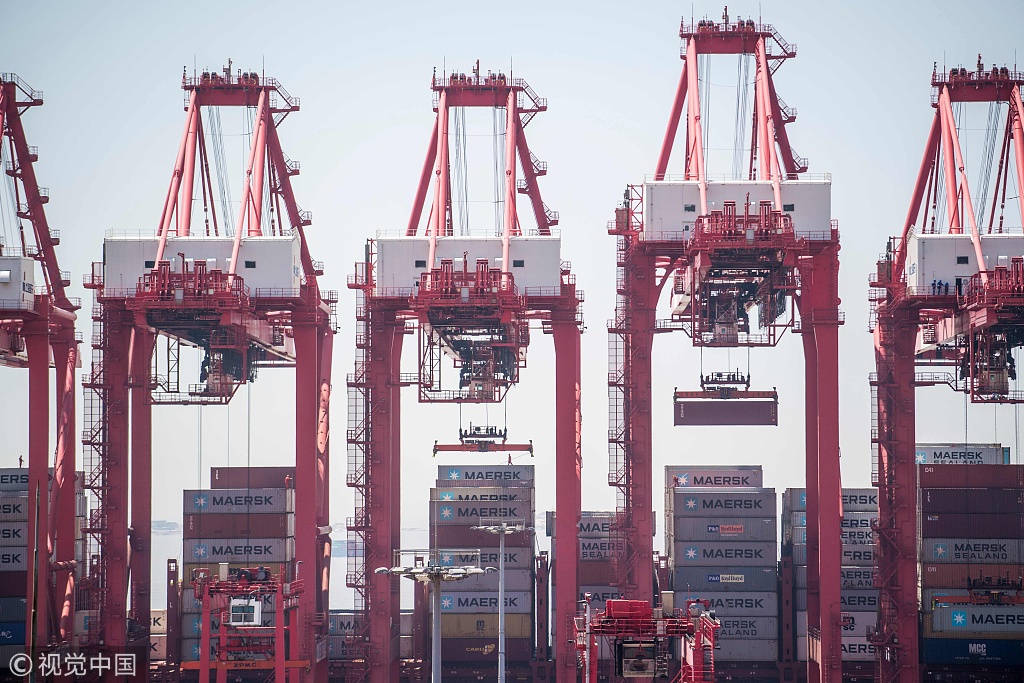
It is often said that the United States experiences trade deficits in part because of low wages abroad and because foreign governments unfairly subsidize certain industries, thereby creating an “unlevel playing field”.
The objective here is to explain why US trade deficits will not improve at all as a direct consequence of higher import tariffs. The same is true if foreign governments stop helping favored industries.
A country’s current account is defined as the sum of: (a) the balance of trade in merchandise and services; (b) net factor income (what American workers, firms and investors earn abroad minus what foreign workers, firms and investors earn in the US); and (c) net international transfer payments (gifts the US receives minus American gifts to foreigners, including foreign aid).
In recent years, item (b) has been a small positive (about $50 billion per year) and item (c) has been negative of a bit more than $50 billion per year. Thus, items (b) and (c) tend to offset each other, implying that the US current account has been negative primarily because of trade deficits.
The latter, in turn, has existed because large merchandise trade deficits are only partially offset by a relatively smaller surplus with regard to trade in services.
International economic textbooks explain that the current account for a country equals total income in that country, called gross national income (GNI) minus total expenditure in that country, gross national expenditure (GNE).
Conceptually, a current account imbalance is similar to a budget surplus or deficit for an individual. This fact provides an easily understood analogy with regard to the underlying cause of current account or trade balance deficits. Furthermore, it sheds light on the mistaken idea that import tariffs and/or inducing foreign governments to “play fair” will improve the US trade balance.
Suppose you have a job that pays you $40,000 per year after taxes, but you spend $50,000 each year. Thus, you have a budget deficit of $10,000 every year. Assume also that you buy almost everything from a few stores that have very low prices because they pay exceptionally low wages.
It would be silly to blame your budget deficits on the fact that some stores pay low wages. Your budget deficits rise because you want to have a higher standard of living than your income allows — plain and simple.
If the government levies a high sales tax on the products from the low-wage stores, but not on products from other stores, this will not in itself affect your budget deficits. You will simply buy less from the low-wage stores and more from other sellers.
The same conclusion holds if the government were to levy a high sales tax on products from all stores. Your budget deficit would continue to persist unless the higher prices for all products induce you to stop trying to live beyond your means.
Indeed, if you were determined to maintain your “high living style” after the high sales taxes were levied, then you would have to spend more than ever, thereby increasing your budget deficit.
Similarly, the underlying cause of US trade balance and current account deficits is that Americans (including households, firms and governments at all levels) spend more than total income incomes in the US. All households combined spend less than their total incomes, i.e., the household sector is a net saver.
However, US households save a much lower percentage of their incomes than most affluent countries. For example, historically the Japanese have saved more than 20 percent of their incomes, thereby generating their persistent trade surpluses.
It is well known that the US government has persistently large budget deficits. That is, total outlays (government purchases plus transfer payments) consistently exceed gross federal government tax revenue.
Apparently, Americans want the federal government to buy and give away more than they are willing to pay for via taxes. At a superficial level, it appears as though the US current account and trade deficits are caused by the federal government budget deficits.
However, if households saved significantly more, this could offset the government budget deficits and conceivably generate a balance between exports and imports.
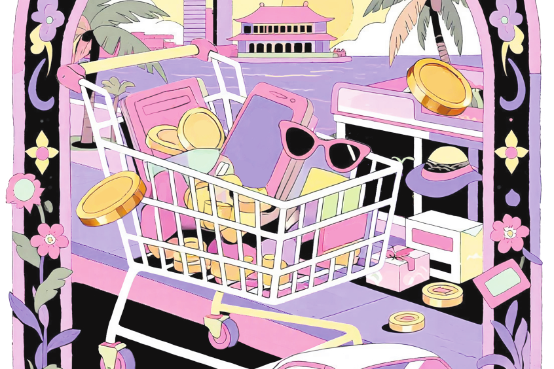
The recent government plans to improve the US’ trade and current account deficits by perhaps imposing high tariffs on imports from a few countries (such as Mexico and China) is equivalent to trying to fix your budget deficit by imposing a high sales tax on low-wage firms.
This simply will not work! The same is true if the government levies high tariffs on all imports.

What about the argument that excessive imports into America are caused, in part, because foreign governments unfairly help their firms, thereby enabling them to sell at relatively low prices?
To the extent that unfair competition exists, this harms the American firms and workers who compete with the subsidized foreign firms. However, such actions do not affect the overall size of US current account deficits.
If all unfair international competition disappeared, this would increase the prices Americans pay for some imports, but the overall US trade balance would not improve unless Americans say: “Well … now that imports are more expensive, maybe we should start living within our means. Let’s buy less and save more. Also, let’s vote for politicians who will spend less and tax us more!”
A logical question is “but if US imports decrease because tariffs and/or a ‘level playing field’ make imports more expensive, then why won’t the trade deficit get smaller?”
The answer is that imports will improve initially, but this will cause the dollar to appreciate in foreign currency markets. This, in turn, will (a) partially offset an increase in import prices from tariffs and (b) increase the foreign currency prices of US exports.
(If it takes more yuan, yen or euros to buy one dollar, then it also will take more foreign currency units to buy US products.) The overall net effect of higher import tariffs and the appreciation of the dollar will be fewer imports, but exports will decrease by the same value.
If the objective is to reduce the US trade deficit, then the enemy is not cheap foreign labor or unfair foreign competition. The enemy is us!
America needs to stop living beyond its means. The only way to improve the US current account and trade balance is to: (a) get Americans to save a higher percentage of their incomes and/or (b) reduce government budget deficits.
The author is professor of economics at Miami University in Oxford, Ohio.