


China and US should avoid a 'cool war'









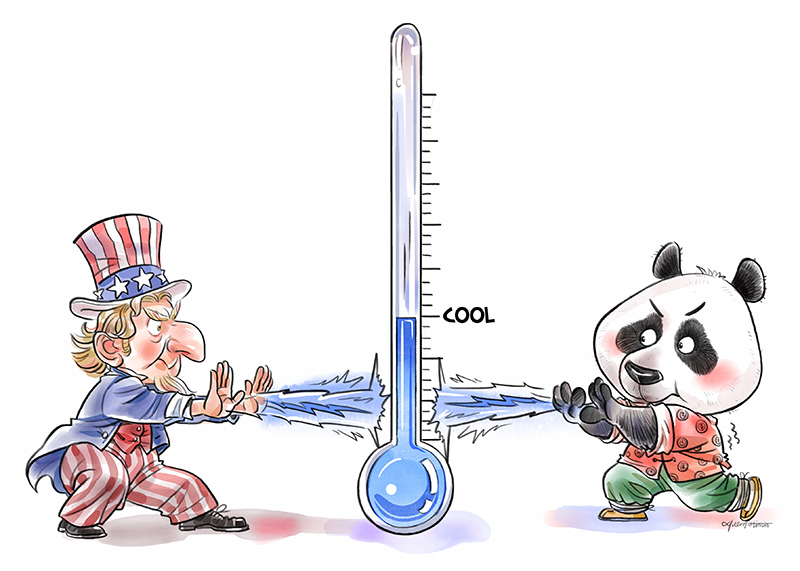
In recent years, fears of a "new cold war" between the United States and China have been rising. But the tensions between the two powers can be better described as a "cool war", characterized not by old-fashioned spheres of interest, proxy wars, and the threat of "mutually assured destruction", but by an unprecedented combination of wide-ranging competition and deep interconnection.
Even without the threat of nuclear annihilation that marked the Cold War, a "lose-lose" outcome is likely in this "cool war", not least because, in a scenario where either the US or China begins to gain an advantage over the other, the loser could well act rashly to bring the other down with it. But a win-lose or even win-win outcome is also possible. Whatever happens, the effects will reverberate globally.
'Cool war' dynamics
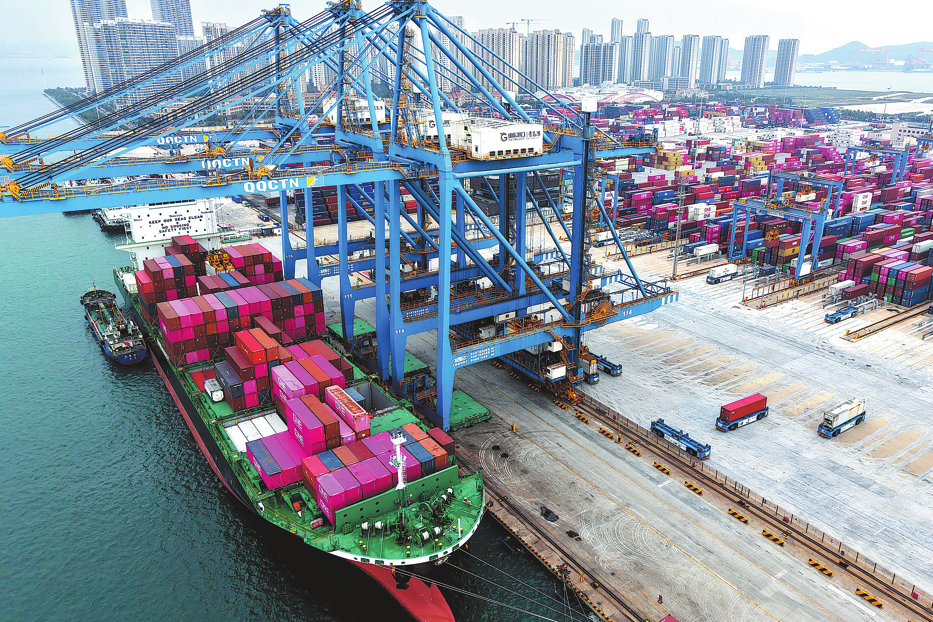
The ongoing Sino-US trade war, which the US initiated in the summer of 2018, offers a straightforward example of "cool-war" dynamics. Whereas the Soviet Union was a closed economy, China has, over four decades of "reform and opening-up", established itself as one of the world's top three global supply-chain hubs, along with the US and Germany.
Given the deep interconnectedness of the US and Chinese economies-both with each other and the rest of the world-everybody wins if the trade war ends. That is why the recent "phase-one" trade deal is good news.
But the next step remains far from certain. If the "phase-one" deal falters and the conflict continues to escalate, the US and China could move to sever direct ties. Given the difficulty of untangling global supply chains, however, the US and China would remain indirectly linked. So, while the world economy would be reshaped, and everyone would suffer from the added cost of increased trade frictions, the formation of entirely separate, competing trading systems is unlikely.
Competition not limited to trade
Unfortunately, trade may not be the only area where all-out strategic competition is in the cards. The US and China increasingly seem to be embracing a Cold War-style zero-sum approach to national security, which threatens to bring about a wide-ranging and extremely wasteful bilateral contest over everything from defense and innovation to finance and ideology.
Like the Cold War arms race, such competition would lead to what American ecologist Garrett Hardin called the "tragedy of commons": people overuse the resources that are available to them, without accounting for the negative effects for society (including themselves). The resources the US and China would channel toward their all-encompassing competition-and those that other countries would also have to spend to adjust to this new strategic environment-would dwarf the value created through international trade and investment.
For example, in technology, the Sino-American competition would lead to two separate innovation ecosystems, each with different standards and core technologies. This would drastically increase the costs of research and development and deepen the risks of damaging systemic disruptions-a costly step backward after decades of globalization.
Global peace, stability could be undermined
Such fragmentation would also gut global governance. Already strained multilateral institutions-the United Nations, the International Monetary Fund and the World Trade Organization, to name three of the more vulnerable-would cease to function in any meaningful way, undermining peace and stability worldwide. Other bulwarks of the global economy, such as payments systems, would similarly break down.
To avoid this outcome, the US and China must take steps to build trust, strengthen cooperation, and improve policy discipline. This does not mean they have to agree on everything. Rather, in line with the Chinese proverb "no friendship can be built without fights", they must express their disagreements clearly and respectfully, and assert their respective red lines honestly.
For example, the US would need to agree not to challenge China on its basic growth model, its political system, or the underlying ideology. This would mean limiting the "whole-of-government" approach to relations that US Vice-President Mike Pence advocated-and accused China of employing-in 2018. Strategic competition is inevitable, but not just any tool or topic is fair game. Fortunately, there are signs that US trade negotiators, at least, recognize China's ideological red lines.
This is not to say that China has no concessions to make-or that it is not willing to make them. In line with US demands, and its own long-term structural-reform objectives, China is committed to continuing to open up its economy and financial system. The Chinese government's aggressive development of dynamic urban clusters, such as the Guangdong-Hong Kong Macao Greater Bay Area, supports this effort, as do its measures to improve sustainability, reduce corruption, streamline bureaucracy and address inequality.
China willing to cooperate
China has also demonstrated its willingness to cooperate on supplying global public goods by participating in multilateral frameworks and agreements such as the 2015 Paris climate accord (from which the US has withdrawn). China has also used its wealth to invest in innovation and support development far beyond its borders.
The "cool war" threatens to undermine these efforts, because facing the US at the negotiating table requires China to strengthen its own position above all. Which means ensuring that disruptions caused by US measures aimed at making short-term gains do not present a long-term systemic threat to China, even as they hurt the global economy as a whole.
A Sino-US "cool war" would be far less cut and dried than the Cold War. Minimizing the fallout will require both sides to recognize that, in an interconnected world, efforts to strengthen their respective position become self-defeating when they undermine global stability and dynamism. The trade war has thrown this lesson into sharp relief. Unfortunately, there is little reason to believe that it has been learned by the US.
Andrew Sheng is a distinguished fellow of the Asia Global Institute at the University of Hong Kong and a member of the UNEP Advisory Council on Sustainable Finance. And Xiao Geng, president of the Hong Kong Institution for International Finance, is a professor at and director of the Research Institute of Maritime Silk-Road at Peking University HSBC Business School.
Project Syndicate
The views don't necessarily reflect those of China Daily.