


A lasting legacy of ancient wisdom









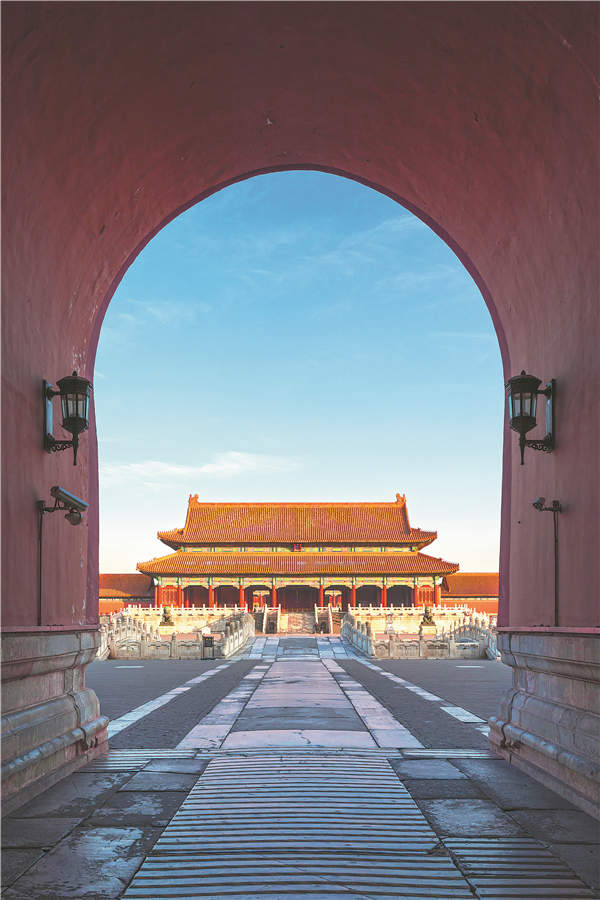
The Forbidden City stands as a testimony to past glory that informs contemporary people about Chinese civilization's advanced thought and practices across six centuries, Wang Kaihao reports.
Editor's note: The Forbidden City is celebrating the 600th anniversary of its completion this year. China Daily journalists speak with historians, researchers and experts to discover how this architectural wonder that embodies traditional Chinese thinking evolved over time and its vital role in East-West communications.
If the millennia during which China built and renovated palaces is viewed as an epic, Beijing's Forbidden City is an awe-inspiring final chapter.
The previous pages of this story may have been marvelous. But they're at least partially, if not largely, lost to the rise and fall of many dynasties, leaving behind ruins that serve as archaeological puzzles that experts are still putting together.
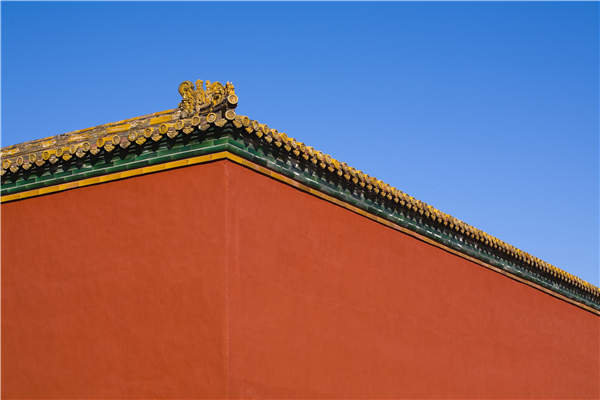
But in the heart of Beijing stands a 720,000-square-meter palace complex made of wood and earthen bricks, the largest surviving specimen of its kind in the world.
And this compound, which served as the imperial palace from 1420 to 1911, where 24 emperors once lived, is celebrating the 600th anniversary of its completion this year.
For this special moment, the Meridian Gate Galleries by the museum's entrance have become a "lobby "to receive visitors to the ongoing exhibition, Everlasting Splendor: Six Centuries at the Forbidden City, which will run through Nov 15.
"There are so many things to talk about within 600 years," says Zhao Peng, director of the museum's architectural heritage department, who is also the exhibition's main curator.
"It's better to focus on the 'city'-that is, the architecture-to see how this place formed and evolved … It's the crystallized wisdom and talent of the ancient Chinese."
Still, it's not easy to select just 450 items, including construction components and emperors' relics, to unfurl a panoramic picture of architectural glamour.
Eighteen landmark years during the six centuries of history have been chosen to highlight the exhibits in chronological order to show how the compound was born, grew up and matured.
"From these slices of time, we can see the bigger historical picture," Zhao says.
In 1406, Zhu Di, the third emperor of the Ming Dynasty (1368-1644), proposed moving the national capital from Nanjing, capital of today's Jiangsu province, to Beijing, where he once resided as a prince and could better safeguard the northern frontiers.