



Earlier-time boosters of cultural confidence










Popular appeal of the past continues to grow as value of nation's historical heritage is better understood
Editor's note: A survey among China Daily's overseas readers ahead of the 20th National Congress of the Communist Party of China shows that the nation's ecological progress, economy, diplomacy, science and technology, and the Belt and Road Initiative are among some of the most closely observed issues. China Daily is publishing a series of special articles to offer readers an in-depth look at these topics.
In 2019, the archaeological ruins of the center of power and belief of an early regional society, which existed in the lower reaches of the Yangtze River in the Late Neolithic period of China, were inscribed on the list of UNESCO World Heritage Sites.
People today marvel at the exquisite jade items uncovered amid the Archaeological Ruins of Liangzhu City in Zhejiang province, the legacy of a society that excelled in water conservancy and rice cultivation.
Although it dates back 4,300 to 5,300 years, the Liangzhu site resonates with Chinese people today despite that broad span of time as the influence of its key cultural elements has endured through the millennia.
"It is a physical testimony of the 5,000-year-old civilization in China," said archaeologist Wang Wei, a researcher at the Chinese Academy of Social Sciences' Academic Division of History. "More importantly, it may contribute to drafting a new definition of civilization in the world."
Chinese archaeologists are sparing no effort to better trace the country's rich history through well-organized excavations. Over 8,800 excavations were conducted in the past decade, and telling stories of traditional Chinese culture through archaeological findings has stepped into the spotlight.
The Political Bureau of the Communist Party of China Central Committee has held two group study sessions on archaeology, one in September 2020 and the other in May this year. At these meetings, President Xi Jinping highlighted the importance of archaeology and urged further efforts to advance the study of the history of Chinese civilization so its achievements can help the nation strengthen its cultural confidence.
Apart from Liangzhu, a long list of key achievements in deciphering the early stages of Chinese civilization have been made in the past few years, including the discovery of magnificent 4,000-year-old "palaces" in the stone city ruins of Shimao in Shaanxi province, the rigidly-designed urban road network of Henan province's Erlitou site, the capital city of a central dynasty from about 3,500 years ago, and the fruitful findings in the 3,000-year-old Sanxingdui site in Sichuan province, where an astonishing gold mask and breathtaking bronze wares were uncovered.
"The recent studies have enriched our understanding of how our civilization started," said Chen Xingcan, director of the Institute of Archaeology at the Chinese Academy of Social Sciences. "That will greatly help to build up an academic system of archaeology with Chinese characteristics."
The long course of the nation's history is being charted by the revelations brought to light by Chinese archaeologists' shovels.
Monumental discoveries have continually emerged in recent years, including the 2,000-year-old tomb of Marquis of Haihun in Jiangxi province, Nanhai One, a fully loaded shipwreck from the Southern Song period (1127-1279) off the coast of Guangdong province, and the recent discovery of a 1-million-year-old human skull fossil in Hubei province.
"Booming interdisciplinary research and the adoption of new high-tech approaches are ensuring that Chinese archaeology makes bigger achievements," Chen said. "Technology also provides good ways to promote archaeology to the public."
A long list of successful TV shows featuring archaeology and cultural relics have hit Chinese screens in the past decade. Some of the recent findings have been written into high school textbooks.
In 2020, livestreaming broadcasts of an annual appraisal meeting of the country's top 10 archaeological discoveries attracted an audience of 28 million. The excavations at the Sanxingdui site have become a cultural phenomenon with the public lining up to view them in 2021 and this year.
"Archaeology is no longer in an ivory tower," Wang added. "Wider exposure of our work has ignited people's passion for traditional Chinese culture."
Youthful enthusiasm
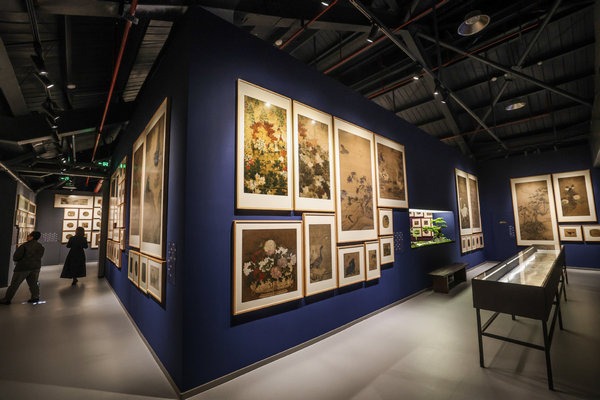
Over the past decade, museums have become popular destinations in China, especially for the young generation.
Since 2012, the number of tourist visits to the Palace Museum in Beijing, which is also called the Forbidden City, has increased sharply. Before the COVID-19 pandemic, the number had risen to 19.33 million in 2019. Last year, Sanxingdui Museum in Guanghan, Sichuan province, made headlines many times and became a popular destination. The museum situated in a small city known for its bronze wares of interesting shapes, such as masks with bulging eyes and big ears, received about 1.5 million tourist visits in 2021.
Fang Qin, director of Hubei Provincial Museum, said that visiting museums is becoming a routine leisure activity, just like going to movie theaters. Ten years ago, there were few visitors to the museum, he said.
In July, Fang livestreamed a show about the Shijiahe group of late Neolithic sites in Tianmen, dating back 5,900 years, which attracted about 10 million viewers.
"I could never imagine 10 years ago that museums could be so popular," said the 53-year-old.
The number of museums in the country has increased to 6,138 this year from 3,866 in 2012. Most of them are free to the public, according to a news conference held on Oct 8 in Beijing introducing the development of China's culture industry. The number of tourist visits grew from 560 million in 2012 to 1.2 billion in 2019. Last year, about 779 million visits were made to museums despite the pandemic prevention and control measures.
Ji Fangfang, associate professor at the Chinese Academy of Social Sciences, said that after people's material lives improve, they want to enjoy more cultural pursuits and it's natural for them to visit museums to learn more about their own culture.
"Many young people are proud of their culture. They use Chinese elements to give them a distinctive identity from others," said Ji.
According to a report on the traditional culture trend in 2021, released on Feb 3 by Bilibili, an online video-sharing platform popular among young people, more than 177 million of the platform's users said they enjoyed videos featuring traditional Chinese culture.
The culture boom is driving more young people to go to museums. Fang, the museum director, said that about 70 percent of visitors going to Hubei Provincial Museum are young people. Many of the museum's exhibits are relics unearthed at archaeological sites in the middle reaches of Yangtze River.
"As an archaeologist, I feel very happy that people are interested in our culture."
Restored pages
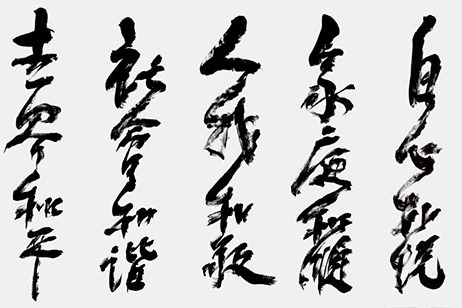
Like cultural relics, ancient books that record the continuous Chinese cultural lineage, are also growing in popularity.
According to Zhang Zhiqing, deputy director of the National Library of China, during the seven-day National Day holiday in early October, half of the library's visitors also went to the National Museum of Classic Books, which is affiliated to the library. The museum offers a panorama of Chinese culture and history through its comprehensive collection of texts.
Such a large number of visitors to the museum was unprecedented. "It means people have a growing interest in ancient books, and it seems their understanding of such books is deepening," said Zhang.
A national effort to systemically protect ancient books was launched in 2007, and some of the key tasks such as a national census of ancient texts have been completed. The rest of the work, which includes research and publication is ongoing.
During the period of the 13th Five-Year Plan (2016-20), the distribution and preservation of ancient books in China were generally made clear, with the nationwide census on ancient books having listed 2.7 million copies, Xiong Yuanming, director of the National Library of China and director of the National Center for the Preservation and Conservation of Ancient Books, said at a conference in 2021 summarizing the work being done to protect the nation's ancient books.
In recent years, the government has released a large number of documents on the protection of ancient books, highlighting the great importance it attaches to the task, said Zhang, noting that this year, enhancing ancient book protection was written into the central government's annual work report for the first time.
A typical example in this field was a program launched in 2013 by the National Library of China to restore the "Tianlu Linlang" collection of ancient books. After eight years, the library announced the restoration work on the more than 300 ancient books collected by the Qing Dynasty (1644-1911) emperors that had once been stored in the Forbidden City had been completed.
"The restorers worked with great care, and made great achievements in the program. Through it, we have also cultivated a large number of young restorers, and applied modern technology in the process, promoting the development of ancient book restoring techniques in a scientific way," said Zhang.
A highlight of the work has been the digitization of the books. "Ancient books are cultural relics, which are becoming increasingly fragile. We protect them in a digital way, which means we scan them and share the copies, so that the general public can make good use of them," said Zhang.
Protecting through inheriting is another recent trend. "A large number of television programs such as China in the Classics (a show produced by China Media Group) have sought content in ancient classics which is helpful in modern life," said Zhang.
The series examines the stirring stories of ancient Chinese classics by selecting the most outstanding of these traditional, cultural masterpieces and examining the creation process and core ideology in a form that combines cultural seminars, drama and visualization in a way that will appeal to modern audiences.
"Showing the ideas, knowledge and culture in ancient books through operas, singing and dancing has worked well," Zhang said.
The living past
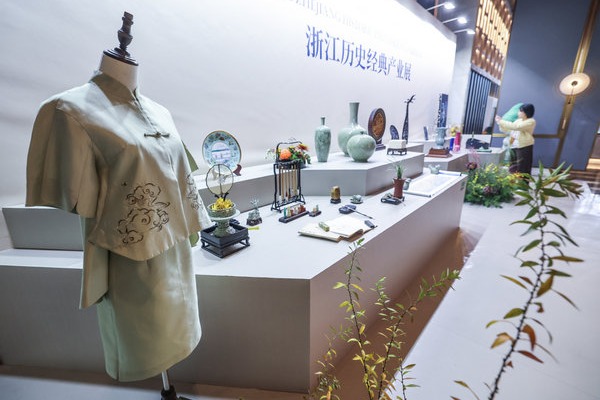
Some traditional forms of culture are still being practiced by people today, and China has redoubled its efforts to protect its intangible cultural heritage.
According to Ma Shengde, former deputy director of the Intangible Cultural Heritage Department of the Ministry of Culture and Tourism, the Chinese government attaches great importance to protecting the nation's living expressions and practices of traditional culture.
"A nationwide investigation identified nearly 870,000 intangible cultural heritage elements in China," Ma told huanqiu.com. "After the Intangible Cultural Heritage Law of China was enacted (coming into effect on June 1, 2011), the last decade has witnessed the work to protect the nation's intangible cultural heritage enter a prosperous new era."
With a growing number of intangible cultural heritage elements having been documented, displayed and spread, "their connotations and values are being respected and accepted by more people in the society," An Deming, deputy director of Institute of Literature, Chinese Academy of Social Sciences, told China Daily.
"More importantly, the inheritors of intangible cultural heritage have become more valued in recent years," he added.
Ma also told huanqiu.com that proactive explorations had been made to help traditional crafts become part of modern life. For example, the well-acclaimed animated film I Am What I Am, which was released in 2021 telling the story of some young people inheriting and developing traditional Cantonese lion dance has moved Ma and moviegoers nationwide.
He considered popularizing and spreading awareness of the country's intangible cultural heritage in creative ways like this is a good way to make them more accessible and accepted by young people.
According to Wang Chenyang, director of the Intangible Cultural Heritage Department of the Ministry of Culture and Tourism, there are 1,557 national-level intangible cultural heritage elements listed by the State Council, China's Cabinet, and the ministry has identified 3,062 national-level inheritors of intangible cultural heritage. Forty-two living expressions of China's past are inscribed on UNESCO's intangible cultural heritage list, the most of any country.
An said that China has explored its own way of protecting its intangible cultural heritage, and it is contributing its experience to the international community.
Wang told China Media Group recently, that intangible cultural heritage protection in China had entered a new stage as it is now protected in a systematic way. "We will insist on the creative transformation and development of traditional Chinese culture, make the progress benefit the general public, and elevate our work in this field to a new level," he said.
Thriving traditional villages
Traditional villages are another important legacy of the past.
Regarded as key repositories of Chinese culture and tradition, the age-old villages had been rapidly disappearing since the beginning of the 21st century and were in danger of disappearing completely. However, the situation has been changed owing to the campaign to protect traditional villages, which has been carried out by both individuals and the central government over the past decade.
Li Xiaolong, an official at the Ministry of Housing and Urban-Rural Development, said at a news conference last month that since the central government launched its campaign to protect traditional villages in 2012, the nation has included 6,189 villages rich in cultural relics on its protection list. And about 520,000 ancient buildings and traditional residences in villages have been renovated and protected.
Apart from the national-level protection list, many provinces and cities have also established their own lists to protect traditional villages. Altogether, more than 15,000 villages have been included so far, said Li Huadong, a professor from Beijing University of Technology who has been keeping a close eye on village protection for years.
Li said the public awareness of the need to protect traditional villages has increased considerably in recent years. Moreover, thousands of intangible cultural heritages and handicrafts in these villages are being passed down from the older generation to the younger one.
"Traditional villages are like museums of Chinese culture. Traditional Chinese lifestyles, ancient Chinese wisdom like the harmony between human and nature, and traditional virtues of Chinese people can all be found in ancient villages," said Li.
With the working age population moving from the villages to work in cities, leaving the old and children behind, some villages lost their vitality. But with the financial support from governments at various levels, many villages have been able to develop ways to revive themselves.
Longtan village in Pingnan, southern China's Fujian province, with over 120 buildings built in the Ming (1368-1644) and Qing dynasties was once an "empty village". To protect it, the local government helped renovate the old buildings and launched an innovative plan: inviting people from home and abroad to "claim" these old houses for 15 years at a very low rent, about 3 yuan (42 cents) per square meter a year.
Until now, it has attracted more than 100 new residents from home and abroad, most of whom are artists, designers and scholars.
Contact the writers at wangkaihao@chinadaily.com.cn