



Wartime relics tell of sacrifice and resolve
Through preservation efforts in Changsha, people can learn about history's heroes and the battles fought, to prevent them from recurring, Yang Feiyue reports in Changsha.









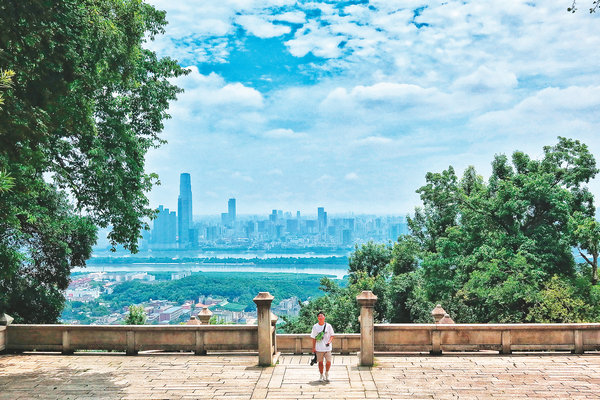
JIANG DONG/CHINA DAILY
As the first light of dawn creeps over the horizon, a crew clutching notebooks has already suited up, walking with measured steps through the woods.
They pause occasionally to study weathered tombstones and record their conditions, bending down to gently wipe the dust from their surfaces.
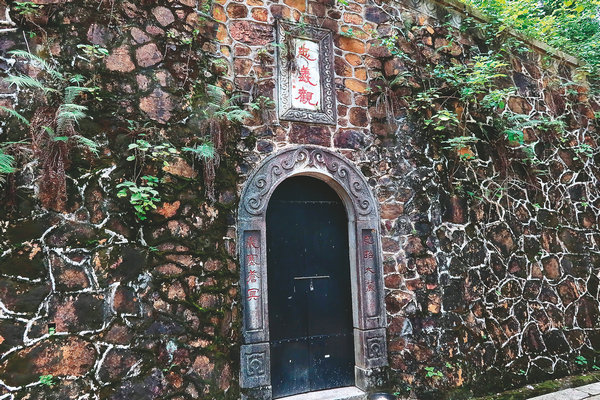
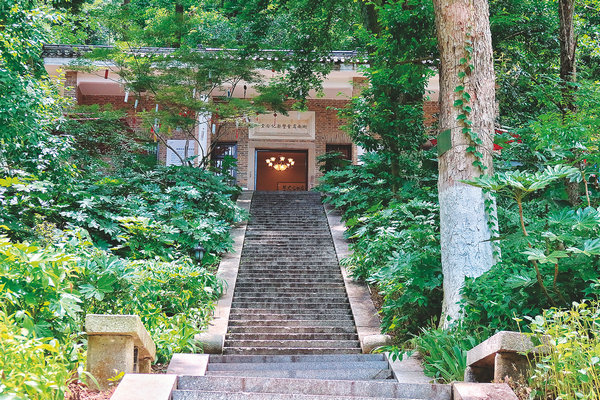
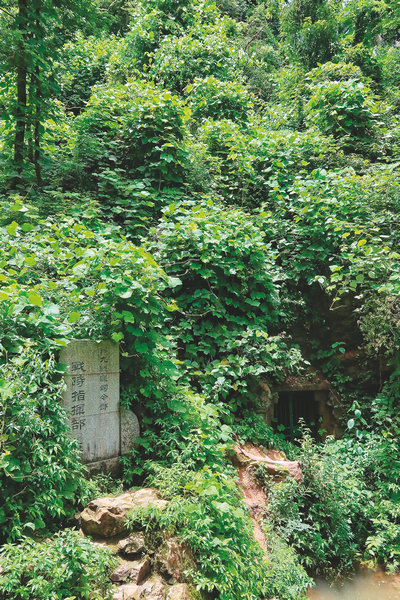
This is the heritage conservation staff of Yuelu Mountain's Lushan scenic area in Changsha, the capital of Central China's Hunan province, which houses major wartime relics from the Chinese People's War of Resistance Against Japanese Aggression (1931-45), including the former command post of a major war zone, artillery fortification, and stone railings inscribed with the names of fallen soldiers.
"We look at roof tiles and wood structures for signs of decay, cracked walls, or shifting foundations," says Liao Hua, a staff member in the cultural relics protection department of the scenic area's administration.
Inspections cover routine daily patrols, safety concerns for when visitor numbers rise, and special targeted remedies when problems are reported, adds Liao, who has worked to preserve those revolutionary cultural relics for two years.
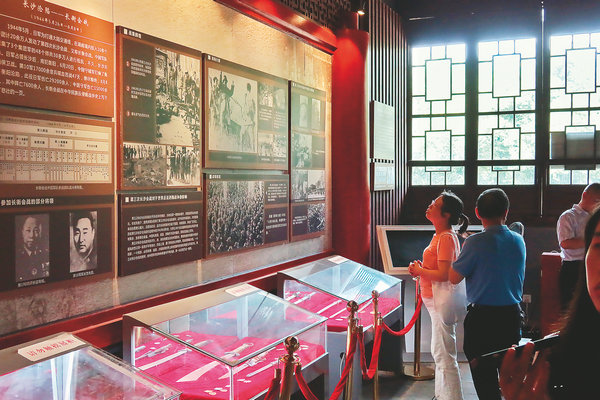
From September 1939 to May 1944, Chinese forces and the invading Japanese army engaged in four large-scale battles centered around Changsha, within China's Ninth Theater, a key military administrative region established as part of the Chinese army's resistance strategy. This five-year campaign is collectively known as the Battles of Changsha.
The first three battles, launched by Japanese invaders amid the expanding scope of World War II, aimed at crippling the main forces of China's Ninth Theater headquarters and undermining the Chinese government's resistance.
Under the command of the Ninth Theater headquarters, Chinese troops mounted a fierce defense. From the Xinqiang River near Yueyang, 110 kilometers from Changsha, to the heart of the provincial capital, they fought bitterly, inflicting significant losses on Japanese forces and forcing them to retreat to their original positions, which secured hard-won victories.
The third battle in 1941-42, in particular, was a resounding success for Chinese forces. With well-coordinated deployments, precise execution, and relentless counterattacks, they delivered a major defeat to the enemy. This victory not only galvanized national morale but also drew international attention, bolstering China's global standing and reinforcing the belief in eventual victory over Japanese aggression. It was the Allies' first major defeat of Japanese invaders after the Pearl Harbor incident.
During the fourth battle in 1944, however, the Japanese massed over 300,000 troops in a renewed offensive. Due to complacency at the strategic level and poor coordination among Chinese units, the city ultimately fell. Nonetheless, Chinese soldiers demonstrated unwavering resolve and a spirit of sacrifice, fighting tenaciously and inflicting heavy casualties on the invading forces.
The main wartime relics have been preserved in the scenic area and are significant remnants from the four major battles of Changsha during the Chinese People's War of Resistance Against Japanese Aggression, says Wang Xiao, a senior official with the cultural relics protection department.
"They stand as enduring witnesses to the Battles of Changsha and hold substantial historical, cultural, and social value for the study of the war and military infrastructure in the following years," Wang adds.
Down the forested slopes across the mountainous area, the tombs of revolutionary martyrs and modern-era luminaries lie scattered. To safeguard these invaluable revolutionary artifacts, the cultural relics protection division was founded in 2004.
"These historical sites are designated as cultural relic protection units and are managed by relevant preservation regulations," Wang notes.
As the region's humid, rainy climate poses natural challenges to preservation, the scenic area conducts regular vegetation clearance around the relics as needed.
It also contracts professional conservation teams to carry out scientific surface cleaning and maintenance, ensuring that the relics remain both presentable and identifiable.
"Overall, the relics are well preserved," Wang says.
In 2015, the country celebrated the 70th anniversary of the war's victory and the city government undertook a comprehensive restoration of wartime memorial structures in the area, building a war memorial in a cultural park.
Among the restored monuments is the memorial stele for the fallen soldiers of the 77th division of the 73rd army of the National Revolutionary Army.
The 77th division played a key role in defending the area around Changsha, which suffered heavy casualties while inflicting significant losses on the Japanese forces.
During the restoration process, a name plaque listing the fallen soldiers of the 77th division was unearthed. "The plaque bears the inscribed names of the heroes who valiantly died in battle. The full recovery of this roster has brought to light the once-obscured stories of bravery and sacrifice, allowing their legacy to transcend history," Wang says.
During a routine cultural relics cleanup in 2015, a modest, damaged cemetery covering about 20 square meters was identified as the burial ground of fallen soldiers from the Fourth Army of the National Revolutionary Army, who also made a big contribution to the Battles of Changsha, especially during the fourth battle where only one-third remained alive after resisting Japanese forces, according to historical records.
In 1945, the dead soldiers were buried at Yuelu Mountain.
In October 2021, authorities carried out restoration work on the tombs of those soldiers.
"A pedestrian path leading to the tombs was constructed to improve access," Wang says.
Today, visitors can visit these fallen heroes. A stone plaque engraved with the words "Eternal Glory "stands in front.
The gravestone consists of three stone slabs offering the date and other information about its erection. The site has been designated as a municipal-level protected cultural heritage site in Changsha.
Other cultural relic preservation efforts included maintenance work on the former site of the Ninth Theater's artillery command headquarters, a key wartime location during the Battles of Changsha, in 2024.
Wang deems these relics as living monuments to history, offering direct, physical proof of past events.
"Such sites not only help the public understand history but also serve as powerful reminders, urging future generations to remember the lessons of the past and prevent the recurrence of historical tragedies," he says.
In recent years, thanks to strong national advocacy, public awareness regarding cultural relics, especially those related to the war, has significantly grown.
On memorial days such as Tomb Sweeping Day, or Qingming Festival, many visitors come to the cemetery to pay tribute to the 73rd army, Wang notes.
Schools also frequently organize groups to honor fallen heroes, allowing young students to connect with history in a meaningful way, he adds.
Cultural relics inspector Liao Hua has also noticed positive changes over the past few years.
"Public awareness has improved. Visitors today generally show great respect for monuments related to the war of resistance against Japanese aggression," Liao says.
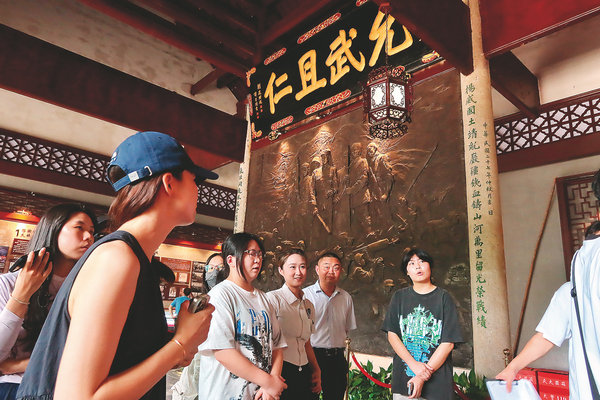
The scenic area has designed a culture tour route, which includes key historical sites and serves as a reference for touring study groups and educational visitors.
"Revolutionary-themed tourism is experiencing a generational shift, with younger visitors becoming the main audience, particularly students participating in study-tour activities," Wang observes.
"This trend has encouraged the development of immersive, interactive experiences at wartime sites, drawing greater attention from younger generations and significantly enhancing the relevance and sustainability of our site preservation and utilization," he says.
Contact the writer at yangfeiyue@chinadaily.com.cn