


What lies beneath: The world of loess
British scholar Jessica Rawson's book uncovers how burial sites illuminate early societies, beliefs and material traditions, Wang Ru reports









When visiting the Yinxu Ruins in Anyang, Henan province, a UNESCO World Heritage site, people are often struck by the replicas of the grand mausoleums left by the Shang Dynasty (c.16th century-11th century BC) royal family. The massive rectangular pits, sometimes plunging more than 10 meters deep, can especially surprise overseas tourists with their sheer scale. Few realize that such engineering feats were made possible by huangtu, or loess, the material that allowed these tombs to be carved so dramatically into the earth.
Loess is a fine, often semicrystal-line dust carried over thousands, or even millions of years from the Altai Mountains, the Qinghai-Tibet Plateau, and the Gobi Desert in northwestern China. With its unusual strength and stability, loess can pack into high-standing, grainy cliffs capable of supporting deep excavations. Western societies, which traditionally built with stone and had limited access to loess, could not construct comparable subterranean structures, according to British art historian and leading Sinologist Jessica Rawson.
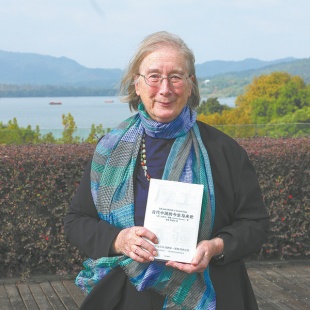
Rawson is one of the most prominent Western scholars specializing in the study of ancient China. She introduced many exhibitions related to China to the United Kingdom when she worked at the British Museum from 1967 to 1994, and served as warden of Merton College at Oxford from 1994 to 2010.
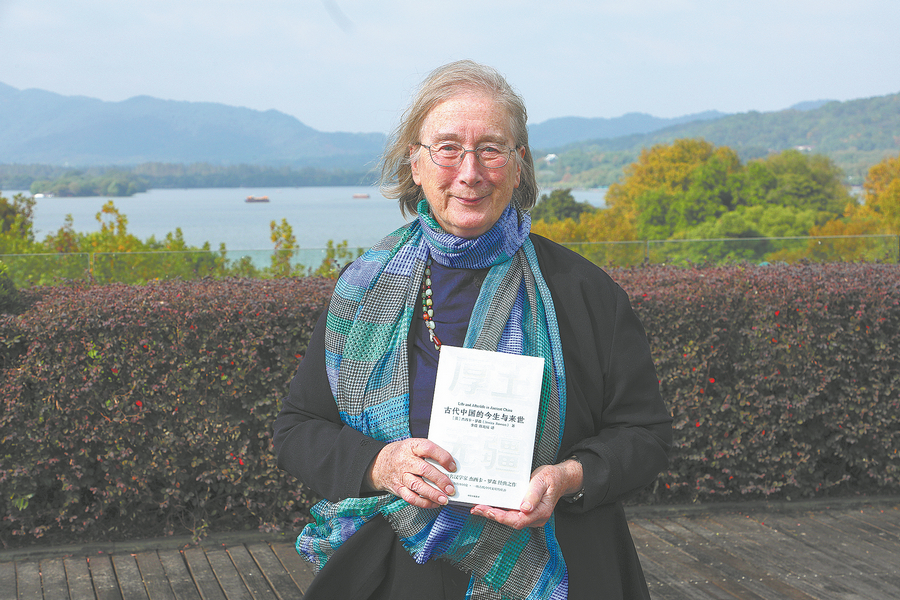
The importance of loess in China's cultural and architectural evolution is highlighted in Life and Afterlife in Ancient China, Rawson's book exploring China's material culture through 12 ancient burial sites (11 tombs and one sacrificial site). Its Chinese edition was published recently by Beijing-based CITIC Press Group.
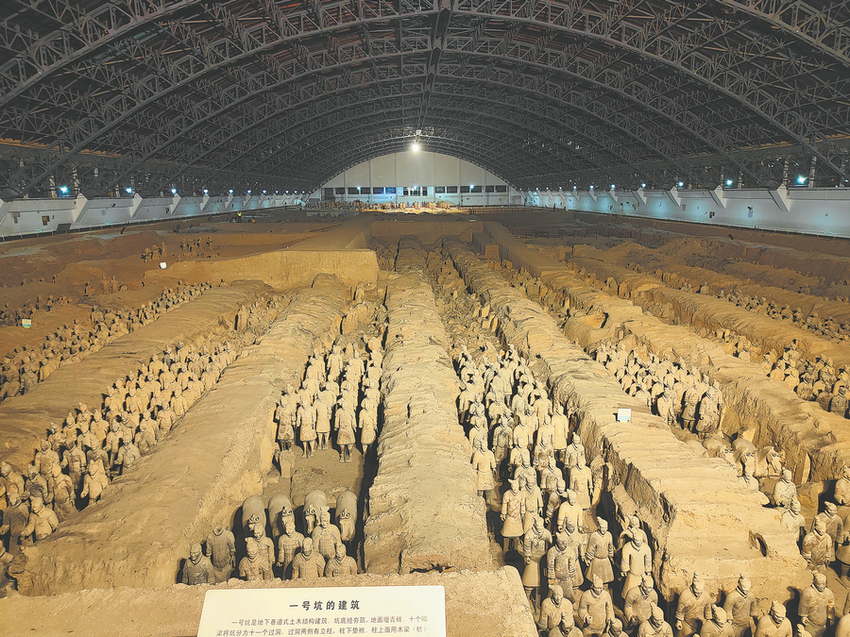
"The only way to study the physical material (of ancient China) is from Chinese burial sites," Rawson tells China Daily. "China has a low survival rate of ancient palaces and houses, but it has very special tombs. They started in the late Neolithic as a long tradition that continued to the 19th century. They are China's major source of information about art, architecture and archaeology for thousands of years."
Behind the construction of these marvelous burial sites is the ancient Chinese people's ideology of "treating the dead as if they are alive".Tombs were conceived as fully realized spaces for an afterlife, furnished with exquisite objects and designed to reflect social hierarchy, aspirations and imagined futures beyond death.
Rawson selected 12 burial sites dating from the late Neolithic period to the Qin Dynasty (221-206 BC), covering regions that rose to prominence at various historical moments. Through these case studies, she uncovers the societies behind the artifacts and the worldviews embedded within them.
Lyu Yanping, the book's planner at the CITIC Press Group, says the work offers a distinctive and refreshing perspective on China's deep past.
"Many insights Rawson mentions in this book are fresh for Chinese people, because she has an outsider's angle to see China and can notice many things Chinese scholars often take for granted or ignore. We think her ideas are attractive to Chinese readers," says Lyu.
One of the most important insights Rawson proposes in this book is the importance of loess. She says she noticed that from her own experiences many years ago, but saw it more clearly when writing this book.
In the 1960s, shortly after graduating from Cambridge University, Rawson joined archaeological excavations in Jordan and Jerusalem across three seasons. The climate there — arid, sun-bleached and defined by sand and stone — left a strong impression on her.
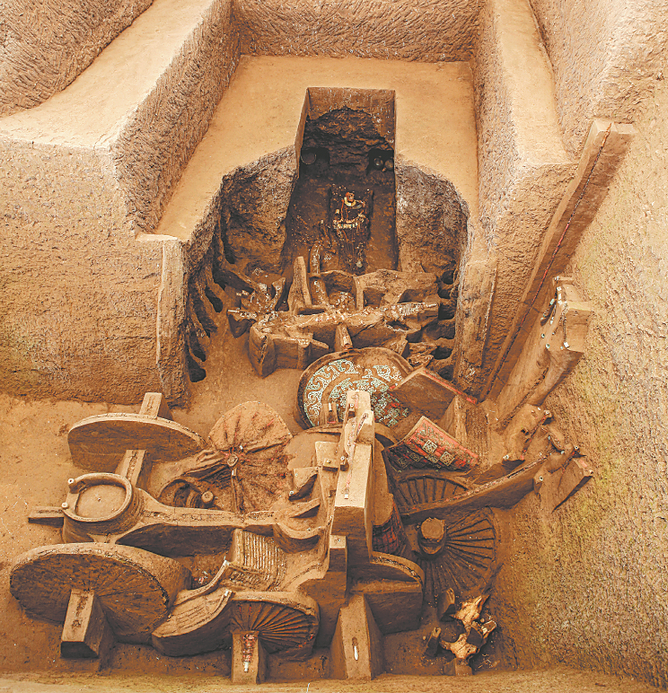
But then, when she visited China years later, she found the country had very different climates and geographical conditions. The contrast, she says, sharpened her understanding of loess as a defining agent in China's architectural history.
"In Western countries or West Asia, people could not compress sand easily into walls like loess. If they dug a tomb, it would have easily collapsed due to the unstable mixture of silt, sand, and gravel. Therefore, they could not build such deep tombs," says Rawson.
China's use of rammed earth to make loess platforms with wooden structures on top, evolved from the Loess Plateau and eventually spread far beyond it — reaching other regions of China as well as neighboring areas such as Japan and the Korean Peninsula. Rawson identifies this as one of ancient China's most defining architectural characteristics.
"Understanding history requires some distance," says Xu Hong, an archaeologist at the Chinese Academy of Social Sciences, speaking at a book-sharing event in November. "As the Chinese verse goes, 'Of the Lushan Mountain we cannot make out the true face, for we are lost in the heart of the very place'. When we view China's remote history millennia ago, we understand it better. Rawson, as a foreign observer with a rational and fresh gaze, can sometimes see things more clearly than we can. That yields thought-provoking insights."
The original English version of the book was published in 2023 for overseas readers who are not familiar with Chinese history and culture. So, it avoids academic opacity and is vivid enough to appeal to the ordinary reader, Xu says.
Rawson has been famous for her ability to unveil the language of objects in international academia, a skill she brings fully to bear in this book.
For example, in this book, when analyzing the objects unearthed from a tomb of the Lord of the Rui state in Hancheng, Shaanxi province, Rawson points out that while following the ritual traditions and changes of the Zhou Dynasty (c. 11th century-256 BC), he also faced challenges from the northern grasslands and probably tried to establish an alliance with the forces there to fortify his territory.
"When you go into a room that is new to you, you look at everything and try to imagine who lives there. I do the same," says Rawson.
"Because China is very different from the West, I think it's very important to see the objects Chinese people use, which may even replace words to understand them. For example, if you look at a table where everybody is eating, you see chopsticks and bowls, and they must eat something that needs a bowl. So what is that? What kind of food are they eating? Then you have to think, what is behind that, what is the difference in the background," she adds.
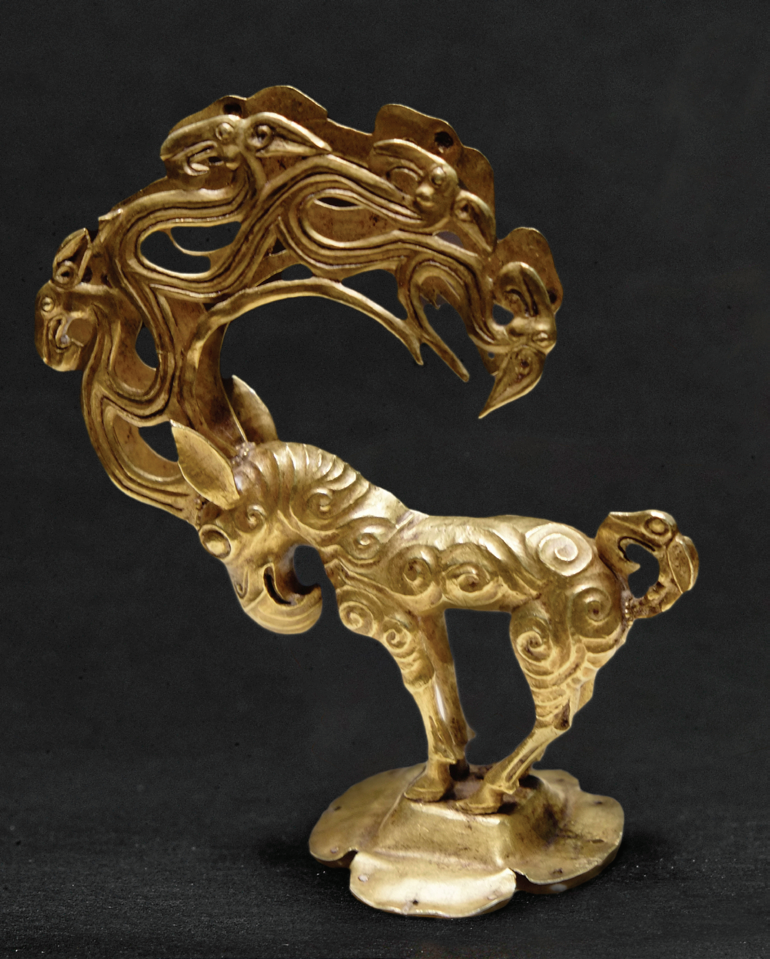
She carefully analyzes the distinctive elements of Chinese civilization in the book. The towering Qinghai-Tibet Plateau, she says, blocked straightforward routes across central Eurasia for millennia. That made China relatively independent and different from the West, leading to its distinctive social systems based on hierarchical family structures, shared writing traditions and sophisticated craftsmanship.
"We cannot expect China's cities or early states to resemble those in Mesopotamia or ancient Egypt. Comparisons of diverse civilizations based on definitions, not just for cities and states, but also for rulership, rituals and beliefs, first identified for West Asia, are misleading here when applied to regions beyond the Qinghai-Tibet Plateau. The peoples in China took their architecture, their ambitions and their skills from their own environments," she writes in the book.
Over the past five decades, Rawson has visited most of China's provinces for research and lectures, publishing more than 100 academic works.
"The thing that makes me happy is that writing this book brings me one step closer to understanding China. In the West, understanding China is difficult. I wrote this book to learn more and tell people what I have learned."
Contact the writer at wangru1@chinadaily.com.cn