


China creates 12.1m new urban jobs









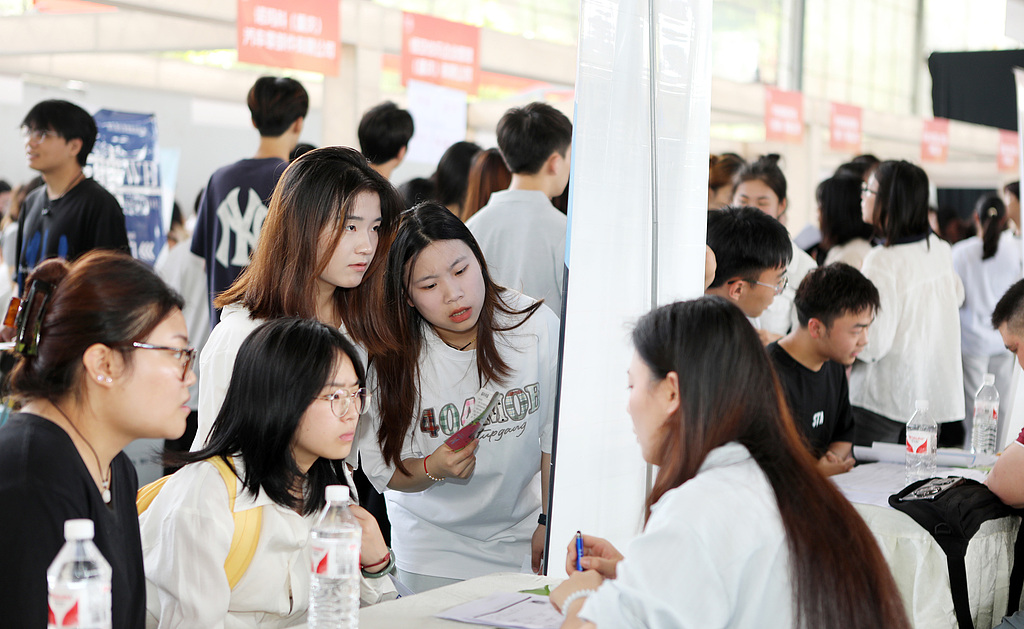
As China achieved its annual target for urban job creation while keeping the unemployment rate at a relatively low level, experts called the steady labor market performance "hard-earned", given the record number of college graduates and significant external economic pressures.
According to data released on Tuesday by the Ministry of Human Resources and Social Security, from January to November, 12.1 million new urban jobs were created nationwide, surpassing the full-year target of 12 million. The figure also exceeded the 11.98 million urban jobs added during the same period last year.
Meanwhile, the average surveyed urban unemployment rate stood at 5.2 percent, which remained below the government's control target of 5.5 percent.
Such stability follows a series of pro-employment and economic support measures rolled out in 2025. The results are particularly noteworthy because a record 12.22 million college graduates entered the job market this year.
During the annual Central Economic Work Conference, which was held in Beijing on Dec 10 and 11, authorities further outlined key measures to stabilize employment, with a focus on expanding and improving job opportunities, in order to prioritize job security and underpin broader economic stability.
The newly announced policies will focus on stabilizing employment for key demographic groups, including university graduates and migrant workers.
In a parallel move to strengthen social protection, the conference endorsed policies to encourage flexible and gig economy workers to enroll in the standard employee social security system.
An official from the ministry's employment promotion department told Xinhua News Agency that future efforts will focus on stabilizing and expanding employment opportunities, as well as improving job quality. These efforts will include targeted support for key groups, enhanced vocational training, better public employment services and stronger backing for entrepreneurship.
Experts described the latest employment figures as "hard-earned" and "impressive" amid current economic and geopolitical headwinds.
Hu Naijun, an associate professor at the University of Chinese Academy of Sciences, said the labor market's resilience reflects a successful shift in China's economic and trade patterns.
"The share of exports to the United States, for example, has dropped sharply since 2018, while exports to the Association of Southeast Asian Nations, the European Union, and countries participating in the Belt and Road Initiative have increased rapidly," he said.
Addressing concerns over modern technology's negative impact on employment, Hu said that while artificial intelligence may replace some workers in certain sectors, it could also create new types of jobs. "There has been no evidence yet of large-scale labor substitution," he added.
Hu highlighted the rise of flexible academic positions — such as contract researchers — as one way to absorb more graduates, helping clear the backlog of the younger generation.
He called for stronger policy coordination, especially in supporting entrepreneurship, citing feedback from small business owners who view high social insurance costs as a burden for new ventures despite substantial tax cuts.
Multipronged approach
Li Chang'an, a professor at the University of International Business and Economics' Academy of China Open Economy Studies in Beijing, said the employment data aligned with expectations and reflected effective policy support.
He noted that underpinning the figures are the results of a multipronged approach — a mix of fiscal and monetary measures, support for market entities through tax cuts and subsidies, and the development of new quality productive forces to spur new forms of employment.
Looking ahead, Li said he expects the employment-first strategy to be further refined during the 15th Five-Year Plan (2026-30) period, with new measures to boost job creation through advanced productivity.
On the impact of AI, he said that technological advances bring both challenges and opportunities, emphasizing the need to harness their potential while establishing safeguards for workers in transition.
lilei@chinadaily.com.cn





- Avalanche in Xinjiang leaves one dead
- Research ward at children's hospital in Shanghai treats over 200 patients with rare diseases
- Chongqing symposium examines planning cities around sound, smell, touch
- Former Qingdao legislature chief under investigation
- Former Xinjiang prosecutor Guo Lianshan under investigation
- Shandong and SCO discuss trade, investment and supply chain cooperation