As the final harmonies of the Live Earth concert in Shanghai faded, Western journalists started singing their predictable songs about China's environmental problems. The lyrics are now very familiar - filthy factories, coal-fired power stations, glaciers melting, pollution affecting Seoul and Tokyo, and rivers too toxic to touch.
For balance, the journalists usually provide a sentence reminding us that China's environmental footprint is still below that of the United States and other industrialized nations. The first half of the next sentence then accepts a theoretical right for China to equalize pollution to equalize wealth but after a comma, the right is revoked.
Western journalists miss a significant problem. Using nation-based statistics to argue about the environmental impacts of a globalizing world is intellectual deceit.
Even if it were possible to calculate accurately the CO2 emissions from electronics factories in China, does that mean that Chinese electronics companies must bear full responsibility for these emissions? If we think the "polluters" are only those who directly create the pollution, we could simply blame welders and lorry drivers, not factory owners or governments. But if factory owners and governments also carry some responsibility, so too do those who purchase and use the products from those factories anywhere in the world.
The concept of "polluters" must include all those who benefit from the production of a product and many, often most, of the consumers of Chinese products will not be in China.
Western analysts are now becoming more careful about applying simplistic nation-based standards to the re-cycling of discarded electrical goods.
Local Chinese people may benefit from the jobs this creates, but it is realized that they also suffer the resultant health problems and toxic air and water. The important point is, where do the discarded electrical goods come from, and who benefits from using and then discarding them? It is not just China.
A similar logic applies when wealthy countries import cheap food and flowers from less wealthy countries. They are, in effect, stealing water and soil nutrients from the poorest people in the most ecologically fragile parts of the world.
Many companies are now transnational, and that further obfuscates responsibility. America has exported at least a grubby toe of its environmental footprint to Mexico, via the filthy US-linked factories in the Maquiladoras region just over the border. Should England or China be responsible for the environmental emissions from the new Shanghai Motors factory in Birmingham UK, or the dealers that will sell the cars in Europe and America? Should China be blamed entirely for the emissions from using imported oil, or the Arab states that make massive profits from extracting and exporting it?
What of the responsibility of those who benefit from investing in transnational companies, through the international financial markets? And what is America's responsibility for the pollution from the Chinese factories that created the wealth that is now invested in US Treasury bonds?
For two millennia, Western civilizations have claimed that the best political leaders are those who benefit their citizens by importing "goods" and exporting "bads". The "goods" may include material resources, ideas, and talented people. The "bads" range from smoke, or effluent from public sewerage systems or factories, to convicts.
Plato's vision of a republic and its laws, only worked if unwanted people - such as criminals, orphans and widows - could be exported to his hypothetical "colonies". The Western colonial rulers implemented the inequitable transfer of human and material "goods" and "bads" on a global scale during their colonial expansionism, including the export of criminals to populate and build their actual colonies. But the world has now run out of "colonies".
China seems to be continuing the tradition as it builds industrial complexes, staffed by Chinese workers, near the sources of raw materials in Africa and elsewhere. The manufactured "goods" are imported to China or elsewhere, but there are also "bads", such as factory pollution.
Forgetting Western history, the Western press is starting to notice and condemn these recent practices.
Journalists point out that Liberia, for example, should not be responsible for the pollution caused by the new Chinese rubber factories there. But who will benefit by using those rubber products? It is not just Liberia or China.
In 1997, I proposed to Britain's cabinet minister, Mo Mowlam, that the "polluter pays" principle is only a starting point, even at a local level. It is a convenient but lazy notion of responsibility. Any regulatory or legal system must, of course, recognize direct blame and liability for environmental problems. But there must also be a concept of the "implication" of all those who intentionally benefit from any activity that harms the environment.
The manufacturer of a plastic bag certainly carries primary responsibility for its production, but you and me are also implicated if we use it. So similarly, the Westerner with the Walkman is partly responsible for the global impact of its production and disposal, wherever that happens.
Environmental problems are not unique in their potential for deceit through nation-based statistics. We are told that the percentage of the Indian population that is illiterate has decreased over recent decades. Yet the actual number of illiterate people in India is greater than the total population of the continent in 1947. If measured in terms of the number of illiterate people per sq km, there has been a rise in illiteracy.
If calculated as a percentage of the world's population, India's decline in literacy is dramatic, notably in comparison with China. And whatever the statistical tricks, the true outcome is that an increasing number of Indian people are excluded from the benefits of global interaction.
Evolution has given the human brain two exceptional abilities. One is to input and process very large amounts of information. The second ability is to process and throw away very large amounts of information. If we did not have this second ability, we would suffer from something like autism, a mental disability typified by excessive information processing and attention to unnecessary detail.
But the downside of this ability to discriminate and discard is that we are programmed not to think too much about what we throw away - whether in the form of people or pollution. If evolution has not programmed us to perceive the throw away problem globally, statistical methods should be deployed to improve our global perception not to make it worse.
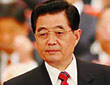
Aware of the growing rich-poor gap, President Hu Jintao wants to build a more "harmonious society" in his next term of office. Hopefully that principle can be extended internationally, and China can demonstrate to the world that the old Western-style colonial-inspired trade in "goods" and "bads" is no longer viable.
Harmony must resonate with its environment, and that environment is now global and connected. However beautiful the music, there can be no harmony in a vacuum.
The author is based at the Centre for International Education and Research, University of Birmingham, UK
(China Daily 07/12/2007 page11)