
中國(guó)網(wǎng)站品牌欄目(頻道)
DOUG JOHNSON: Welcome to EXPLORATIONS, in VOA Special English. I'm Doug Johnson.
This week, we hear about developments in physics that, if proven correct, could have scientists rewriting physics textbooks. Scientists in Switzerland say they have measured a kind of subatomic particle traveling faster than the speed of light. Physics and the special theory of relativity say that is impossible.
We also hear about an American scientist who is developing easy-to-use technology to harvest electrical energy from the simple act of walking. Tom Krupenkin hopes the technology can provide an environmentally friendly way to power mobile electronic devices anywhere.
But first, we hear about a research center where scientists are busy studying the many forms of life that call the tropical rainforest home. Hundreds of scientists are working at the Smithsonian Tropical Research Institute in Panama. This year, the Research Institute is celebrating its 100th anniversary.
(MUSIC)
MARIO RITTER: Light barely reaches the ground of the dense rainforest on Barro Colorado Island in Panama.
(SOUND)
In the early morning hours, two researchers are looking for monkeys. Anthropology Professor Stephanie Ramirez is an expert on spider monkeys.
STEPHANIE RAMIREZ: "I'm interested in is how fruit affects their reproductive potential, because spider monkeys mostly consume fruit. And we've noticed that during times when fruit is not abundant or available they can't conceive."
MARIO RITTER: There are only 39 spider monkeys on the island. Eight have radio transmitters around their necks.
Stephanie Ramirez and Lauren Mills are using a radio receiver to follow the movement of the animals. But they are not alone.
Tony Coates is with the Smithsonian Tropical Research Institute in Panama.
TONY COATES: "The Smithsonian Tropical Research Institute here in Panama is something of a Mecca for all biologists in the world who are interested in the tropics and in tropical biology."
MARIO RITTER: The Institute was started there 100 years ago. Abby Bruning came from South Dakota to study ants.
ABBY BRUNING: "We manipulate their diets. So either they will be on a high carbohydrate or a high protein diet and at the end we run analyses to see how well they fight off infection, death rates and things like that."
MARIO RITTER: Bruning studies a single species of ant. High above the ants, pink flowered almendro trees brighten the forest's canopy. Worker ants carry the flowers to their home. An Azteca ant colony is a big structure that takes more than a year to build. The ants they shelter are the favorite meal of anteaters.
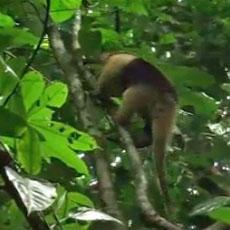
Scientists say there are about 100 kinds of mammals and nearly as many reptiles on the island.
Tony Coates says tropical areas are a sea of life.
TONY COATES: "The vast majority of all species of plants and animals live in the tropics. The vast majority of all the technical knowhow, political will, education and financing is in the temperate world. How to get those two realms together is one of the great issues facing global conservation."
MARIO RITTER: The headquarters of the Smithsonian Tropical Research Institute is in Panama City. Its library on tropical biology is considered one of the world's best.
TONY COATES: "It follows the same system as the Library of Congress."
MARIO RITTER: In nearby Culebra, a Smithsonian educational center is open to the public. Thousands of children visit each year.
(SOUND)
TONY COATES: "That is our biggest educational contribution to our host country, Panama."
MARIO RITTER: The Smithsonian Tropical Research Institute in Panama is celebrating its 100th year. It is also launching a new research center in Gamboa.
Private donors want the institute to study subjects of growing concern today. These include how forest's control erosion and capture carbon from the air. They also want to know how to protect this important ecosystem.
(MUSIC)
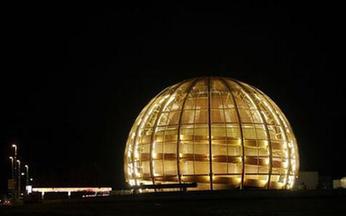
FAITH LAPIDUS: Scientists at the CERN physics laboratory in Geneva, Switzerland, made news last month. They said they measured a subatomic particle, called a neutrino, traveling faster than the speed of light. If this is correct, it violates a main idea of Albert Einstein's special theory of relativity.
Patrick Fox works at the Fermi National Accelerator Laboratory, or Fermilab, near Chicago, Illinois. He knows a lot about the theory of relativity.
PATRICK FOX: "I have been studying that for years. It is something you use day-to-day."
FAITH LAPIDUS: Patrick Fox explains the reason there is a speed limit for all matter in the universe.
PATRICK FOX: "The only objects that can travel at the speed of light are mass-less things, like light."
FAITH LAPIDUS: Robert Plunkett is a scientist with the Minos Neutrino Experiment at Fermilab. He says even subatomic particles like neutrinos have a speed limit.
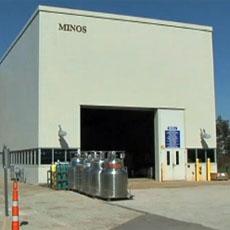
ROBERT PLUNKETT: "The speed of light is the absolute cosmic speed limit for the travel of particles."
FAITH LAPIDUS: But scientists at CERN say they have recorded a neutrino particle that broke the cosmic speed limit. They carried out an experiment that fired a beam of neutrinos from CERN to Italy's INFN Gran Sasso Laboratory. The researchers said they observed about 15,000 neutrino events. And they said their observations appear to show that the neutrinos traveled faster than light. Light travels at about 300,000 kilometers a second.
If this is true, the scientists will have to rethink the laws governing mass and motion.
But Robert Plunkett thinks more work is needed.
ROBERT PLUNKETT: "Skepticism is something we always bring to the table anytime there is a revolutionary claim like this."
FAITH LAPIDUS: Patrick Fox notes that other researchers have yet to confirm the results.
PATRICK FOX: "Before we throw away a cherished principle we have to, of course, check that this result, which is a very interesting result, is confirmed by other sources."
FAITH LAPIDUS: The MINOS experiment at Fermilab will perform similar experiments to the one at CERN. They also will measure the speed of neutrinos.
Robert Plunkett says the MINOS experiment, with an upgrade, can provide a more exact measurement.
ROBERT PLUNKETT: "Our plans are to upgrade this equipment using a system of atomic clocks, much like what they had in the European experiment, to in fact do a measurement that is more precise than theirs, in many ways."
FAITH LAPIDUS: The MINOS experiment may also measures neutrinos traveling faster than the speed of light. If that happens, scientists like Patrick Fox may have to rebuild the laws of physics from the ground up.
(MUSIC)
BOB DOUGHTY: Scientists in the United States are working on a technology that uses human energy to power devices like cell phones, laptop computers, and GPS systems. Tom Krupenkin teaches electrical engineering at the University of Wisconsin. He and his team want to reduce dependence on costly and polluting batteries. Instead of using batteries for power, they have turned to human beings.
TOM KRUPENKIN: "We humans are actually very powerful machines."
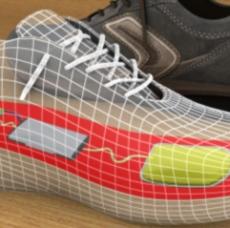
BOB DOUGHTY: Professor Krupenkin and his team have placed a device in a shoe that collects and stores energy from human motion and turns it into electricity. One part of this device is an energy harvester. It has two small containers filled with thousands of very small drops of liquid. These droplets get pushed back and forth as a person walks.
TOM KRUPENKIN: "So it is essentially a flow of a fluid through flexible plastic tubes with embedded electrodes which are covered by a special material that we invented. These actually directly convert it into electric power. Now, output of this energy is stored in a regular rechargeable tiny battery of the style that we have in cell phones."
BOB DOUGHTY: The team has also developed a system to permit use of the stored energy by common mobile devices. It does not require connections with wires, and can be used to create a wireless signal. A cell phone that uses the wireless "hotspot" from the shoe would use much less power than if connected to a wireless telephone network.
The devices are about the size of a credit card. Professor Krupenkin says the system is always powered. So unlike a traditional battery, this energy harvester never needs to be recharged.
The professor says he does not expect this invention to replace traditional batteries. But it will help reduce dependence on them. He says there are a huge number of possible uses for this technology. Professor Krupenkin thinks the technology would be useful for people in rural areas where there is no electrical power.
He notes that it makes a lot of sense for people who depend on devices like mobile phones and laptop computers. And he says the technology could be used by soldiers who must carry battery-powered electronic devices into difficult territory.
Capturing human energy to power globally popular mobile devices could be both a technological and business success. Professor Krupenkin expects to have a commercial product on the market within the next two years.
(MUSIC)
DOUG JOHNSON: This program was produced by Mario Ritter. Our announcers were Faith Lapidus, Bob Doughty and Mario Ritter. I'm Doug Johnson. You can watch a captioned video about the Smithsonian Tropical Research Institute in Panama and find links to other science stories at our website, voaspecialenglish.com.
For English learning activities and interactive features, click on The Classroom at VOA Learning English. And follow us on Facebook, Twitter, YouTube and iTunes. Join us again next week for more Explorations in VOA Special English.
carbohydrate: an essential structural component of living cells and source of energy for animals 碳水化合物
reptile: animals in the class Reptilia 爬行動(dòng)物
neutrino: an elementary particle that usually travels close to the speed of light 微中子
Scientists continue their search for better treatments for multiple sclerosis – and a cure
Fermilab scientists testing Faster-Than-Light Neutrino Claims
(來(lái)源:VOA 編輯:Rosy)
 |
 |
 |
 |
 |
 |


 久久久无码人妻精品无码_6080YYY午夜理论片中无码_性无码专区_无码人妻品一区二区三区精99