
中國網站品牌欄目(頻道)
Part Ⅰ Writing (30 minutes)
Directions:For this part, you are allowed 30 minutes to write a composition on the topic The Impact of the Internet on Interpersonal Communication. You should write at least 150 words but no more than 200 words.
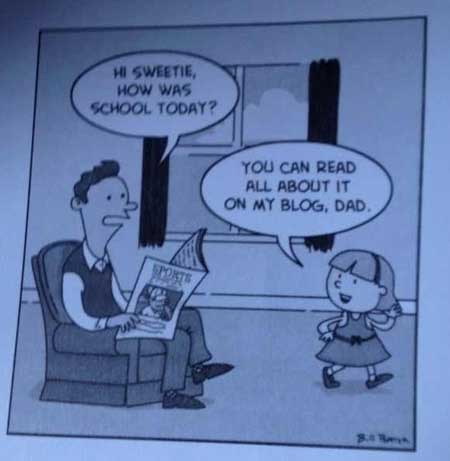
The Impact of the Internet on Interpersonal Communication
Part Ⅱ Reading Comprehension (Skimming and Scanning)(15minutes)
Directions: In this part. You will have 15 minutes to go over the passage quickly and answer the questions on Answer Sheet 1. For questions 1-7, choose the best answer from the four choices marked A)、B)、C)and D). For questions 8-10, complete the sentences with the information given in the passage.
The Three-Year Solution
Hartwick College, a small liberal-arts school in upstate New York, makes New York, makes this offer to well prepared students: earn your undergraduate degree in three years instead of four, and save about 543,000—the amount of one year’s tuition and fees. A number of innovative colleges are making the same offer to students anxious about saving time and money. That’s both an opportunity and a warning for the best higher-education system in the world.
The United States has almost all of the world’s best universities. A recent Chinese survey ranks 35 American universities among the top 50, eight among the top 10. Our research universities have been the key to developing the competitive advantages that help Americans produce 25% of all the world’s wealth. In 2007, 623,805 of the world’s brightest students were attracted to American universities.
Yet, there are signs of peril (危險)within American higher education.U.S.colleges have to compete in the marketplace. Students may choose among 6,000 public, private, nonprofit, for profit, or religious institutions of higher learning. In addition, almost all of the 532 billion the federal government provides for university research is awarded competitively.
But many colleges and universities are stuck in the past. For instance, the idea of the fall-to-spring“school year”hasn’t changed much since before the American Revolution, when we were a summer stretch no longer makes sense. Former George Washington University president Stephen Trachtenberg estimates that a typical college uses its facilities for academic purposes a little more than half the calendar year.“While college facilities sit idle, they continue to generate maintenance expenses that contribute to the high cost of running a college,” he has written.
Within academic departments, tenure(終身職位),combined with age-discrimination laws, makes faculty turnover—critical for a university to remain current in changing times—difficult. Instead of protecting speech and encouraging diversity and innovative thinking, the tenure system often stifles(壓制)them: younger professors must win the approval of established colleagues for tenure, encouraging like-mindedness and sometimes inhibiting the free flow of ideas.
Meanwhile, tuition has soared, leaving graduating students with unprecedented loan debt. Strong campus presidents to manage these problems are becoming harder to find, and to keep. In fact, students now stay on campus almost as long as their presidents. The average amount of time students now take to complete an undergraduate degree has stretched to six years and seven months as students interrupted by work, inconvenienced by unavailable classes, or lured by one more football season find it hard to graduate.
Congress has tried to help students with college costs through Pell Grants and other forms of tuition support. But some of their fixes have made the problem worse. The stack of congressional regulations governing federal student grants and loans now stands twice as tall as I do. Filling out these forms consumes 7% of every tuition dollar.
For all of these reasons, some colleges like Hartwick are rethinking the old way of doing things and questioning decades-old assumptions about what a college degree means. For instance, why does it have to take four years to earn a diploma? This fall, 16 first-year students and four second-year students at Hartwick enrolled in the school’s new three year degree program. According to the college, the plan is designed for high-ability, highly motivated student who wish to save money or to move along more rapidly toward advanced degrees.
By eliminating that extra year, there year degree students save 25% in costs. Instead of taking30credits a year, these students take 40. During January, Hartwick runs a four week course during which students may earn three to four credits on or off campus, including a number of international sites. Summer courses are not required, but a student may enroll in them—and pay extra. Three year students get first crack at course registration. There are no changes in the number of courses professors teach or in their pay.
The three-year degree isn’t a new idea. Geniuses have always breezed through.JudsonCollege, a 350-student institution inAlabama, has offered students a three-year option for 40 years. Students attend “short terms” in May and June to earn the credits required for graduation.BatesCollegeinMaineandBallStateUniversityinIndianaare among other colleges offering three-year options.
Changes at the high-school level are also helping to make it easier for many students to earn their undergraduate degrees in less time. One of five students arrives at college today with Advanced Placement (AP) credits amounting to a semester or more of college level work. Many universities, including large schools like theUniversityofTexas, make it easy for these AP students to graduate faster.
For students who don’t plan to stop with an undergraduate degree, the three-year plan may have an even greater appeal. Dr. John Sergent, head of VanderbiltUniversityMedicalSchool’s residency (住院醫生) program, enrolled in Vanderbilt’s undergraduate college in 1959. He entered medical school after only three years as did four or five of his classmates.” My first year of medical school counted as my senior year, which meant I had to take three to four labs a week to get all my sciences in. I basically skipped my senior year,” says Sergent. He still had time to be a student senator and meet his wife.
There are, however, drawbacks to moving through school at such a brisk pace. For one, it deprives students of the luxury of time to roam (遨游) intellectually. Compressing everything into three years also leaves less time for growing up, engaging in extracurricular activities, and studying abroad. On crowded campuses it could mean fewer opportunities to get into a prized professor’s class.Iowa’sWaldorfCollege has graduated several hundred students in its three-year degree program, but it now phasing out the option. Most Waldorf students wanted the full four-year experience—academically, socially, and athletically. And faculty members will be wary of any change that threatens the core curriculum in the name of moving students into the workforce.
“Most high governmental officials seem to conceive of education in this light—as a way to ensure economic competitiveness and continued economic growth,” Derek Bok, former president of Harvard, told The Washington Post. “I strongly disagree with this approach.” Another risk: the new campus schedules might eventually produce less revenue for the institution and longer working hours for faculty members.
Adopting a three-year option will not come easily to most school. Those that wish to tackle tradition and make American campus more cost-conscious may find it easier to take Trachtenberg’s advice: open campuses year-round.“You could run two complete colleges, with two complete faculties,”he says.“That’s without cutting the length of students’ vacations, increasing class sizes, or requiring faculty to teach more.”
Whether they experiment with three-year degrees, offer year-round classes, challenge the tenure system—or all of the above—universities are slowly realizing that to stay competitive and relevant they must adapt to a rapidly changing world.
Expanding the three-year option may be difficult, but it may be less difficult than asking Congress for additional financial help, asking legislators for more state support, or asking students even higher tuition payments. Campuses willing to adopt convenient schedules along with more focused, less-expensive degrees may find that they have a competitive advantage in attracting bright, motivated students. These sorts of innovations can help American universities avoid the perils of success.
注意:此部分試題請在答題卡1上作答。
Why didHartwickCollegestart three-year degree programs?
A) To create chances for the poor. C) To enroll more students.
B) To cut students’ expenses. D) To solve its financial problems.
2. By quoting Stephen Trachtenberg the author wants to say that .
A) American universities are resistant to change
B) the summer vacation contributes to student growth
C) college facilities could be put to more effective use
D) the costs of running a university are soaring
3. The author thinks the tenure system in American universities .
A)suppresses creative thinking C) guarantees academic freedom
B) creates conflicts among colleagues D) is a sign of age discrimination
4. What is said about the new three-year degree program at Hartwick?
A) Its students have to earn more credits each year.
B) Non-credit courses are eliminated altogether.
C) Its faculty members teach more hours a week.
D) Some summer courses are offered free of charge.
5. What do we learn aboutJudsonCollege’s three-year degree program?
A) It has been running for several decades.
B) It is open to the brightest students only.
C) It is the most successful in the country.
D) It has many practical courses on offer.
6. What changes in high schools help students earn undergraduate degrees in three years?
A) Curriculums have been adapted to students’ needs.
B) More students have Advanced Placement credits.
C) More elective courses are offered in high school.
D) The overall quality of education bas improved.
7. What is said to be a drawback of the three-year college program?
A) Students have to cope with too heavy a workload.
B) Students don’t have much time to roam intellectually.
C) Students have little time to gain practical experience.
D) Students don’t have prized professors to teach them.
8. College faculty members are afraid that the pretext of moving students into the workforce might pose a threat to ______.
9. Universities are increasingly aware that they must adapt to a rapidly changing world in order to______.
10. Convenient academic schedules with more-focused, less-expensive degrees will be more attractive to______.
 |
 |
 |
 |
 |
 |


 久久久无码人妻精品无码_6080YYY午夜理论片中无码_性无码专区_无码人妻品一区二区三区精99