


Transcript of State Councilor and Foreign Minister Wang Yi's exclusive interview with Reuters









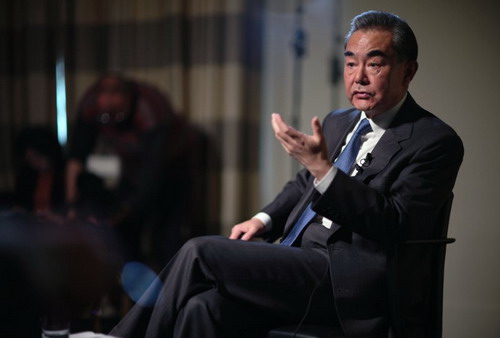
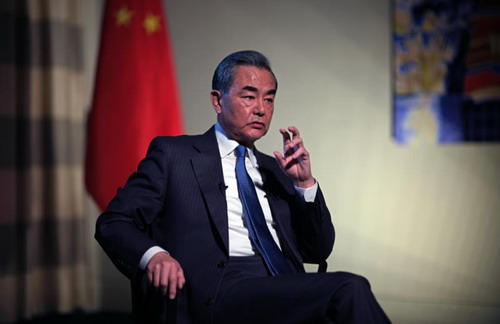
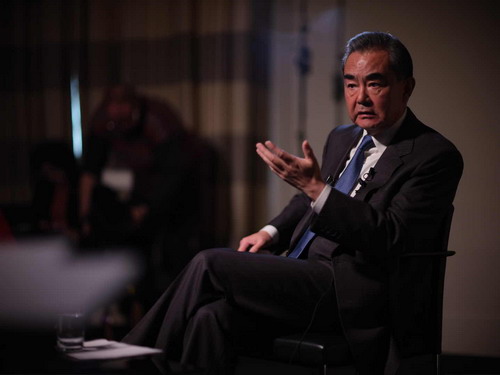
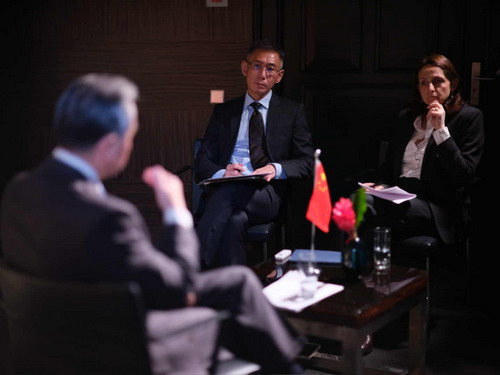
On Feb 14, State Councilor and Foreign Minister Wang Yi sat down with Reuters Global Managing Editor Alessandra Galloni in Berlin for an exclusive interview. The following is the transcript:
Alessandra Galloni: The coronavirus has clearly been tragic for many of your people. It has spread to other parts of the world. It has resulted in travel restrictions. Is China facing a crisis of confidence?
Wang Yi: This sudden outbreak of novel coronavirus pneumonia (NCP, or COVID-19) is a severe challenge to China and the world at large. Under the leadership of President Xi Jinping, the Chinese government and people have withstood the test and won the respect and recognition of the international community with their efforts and even sacrifice.
After the outbreak, the Chinese government immediately set up a nationwide mechanism to mobilize resources from across the country. We have taken the most comprehensive, stringent and thorough prevention and control measures, many of which are well beyond what is required by the International Health Regulations and the recommendations of the World Health Organization (WHO).
With the Chinese speed, we are working day and night to save the life of every patient. With the Chinese strength, we are united as one to contain the further spread of the epidemic. Through these arduous efforts, the epidemic is generally under control. For example, outside Hubei, the number of confirmed cases has been declining for 11 consecutive days across China. That is a cumulative drop of over 50 percent. There is a rapid increase in the cure rate, and nearly 7,000 people have recovered and been discharged from hospital. The case fatality rate is about 2.2 percent nationwide and just 0.49 percent outside Hubei.
These facts and data show that China's decisive response is both right and effective, and that by and large, the outbreak is controllable and the disease curable. As President Xi Jinping points out, we have the confidence, capability and determination to prevail over the virus at an early date.
As a responsible major country, China has from the start acted in an open and transparent manner in releasing relevant information to the world and seeking international cooperation to prevent the spread of the epidemic worldwide. To date, the number of confirmed cases outside China is less than one percent of the total. We are not only doing our very best to ensure the life, safety and health of the Chinese people, but also making contribution and sacrifice for global public health. WHO has on multiple occasions commended China for its responsible actions, speaking highly of China's decisive response and expressing confidence that China will overcome this epidemic.
Virus respects no borders. It requires a collective response from the international community. To date, leaders of over 160 countries and international organizations have expressed their sympathy and support through telegrams or letters. The governments and peoples of several dozen countries are lending a helping hand, and we are truly grateful for these acts of kindness.
In our view, the enhanced inspection measures taken by some countries are reasonable but some other countries have overreacted. Their overreaction has caused unnecessary panic and is not consistent with the WHO recommendations. I believe as the epidemic is gradually brought under control, these countries may consider relaxing the restrictions. At the end of the day, normal exchanges and cooperation among countries must be maintained.
There is a Chinese saying: True gold can stand the test of fire. I'm sure that emerging from this test, the Chinese people will become more resilient and united and the Chinese economy will achieve more solid and sustainable growth. The Chinese people will continue to march confidently toward the goal of establishing a society of moderate prosperity in all respects and embark on a new journey of modernization.
There's another Chinese saying, "Adversity reveals true friendship." As China battles the disease together with the world, its friendship and trust with other countries will be strengthened and deepened. Countries will realize that they live in a global village, with their future interconnected like never before.
Alessandra Galloni: You talked about transparency, but initially China was not forthcoming about the virus, including when there were some people in China who were warning about it. Can you explain why's that decision?
Wang Yi: Well, this is a new virus. So naturally it takes time for people to gain more understanding and knowledge about it. The same has happened in other countries. If we look at past epidemics, we will see that the government will eventually make decisions based on serious and repeated tests and study. That is how a responsible government deals with it.
After individual cases emerged, the Chinese government took prompt actions and informed the WHO at the first opportunity. At the same time, we have made rigorous assessments. In a short period of time, we identified and decided that this is a new virus. Once that decision was made, a nationwide inter-agency task force was quickly put in place. The measures taken by China are timely and swift. This is also the conclusion of the WHO Director-General after his visit to China.
Alessandra Galloni: You said some countries have overreacted. Which countries?
Wang Yi: I don't want to single out individual countries. They have their own judgments and reasons. Everybody can see that the measures taken by those countries go far beyond the recommendations of the WHO. For example, measures have been taken to comprehensively stop people-to-people exchanges. And not only people in Wuhan are evacuated, people in regions where there are only isolated cases or where the epidemic is not severe are also pulled out. We do not interfere with the decisions of other countries. However, when these measures are taken, we must see whether they are truly beneficial to a joint response to the epidemic. There is a question mark on it.
Alessandra Galloni: This is a big challenge to President Xi. How is the government dealing with this?
Wang Yi: This is a comprehensive battle and a people's war, with every person pitching in and playing a role. President Xi is personally overseeing and guiding the response to the epidemic. We quickly set up a national framework of epidemic control on this land of 9.6 million square kilometers and with 1.4 billion people. We are doing everything we can, leaving no stone unturned, in our efforts to contain and mitigate this epidemic. This is an unprecedented endeavor, which is probably unimaginable in many countries. But China pulled this off.
There may be certain questions or challenges to China. Yet the overwhelming majority of countries have expressed their appreciation for what China has been doing. They clearly recognized that only in China and only under the leadership of President Xi can there be such effective measures to put this sudden and fast spreading epidemic under control. What we're doing is protecting the health of the Chinese people and preventing this epidemic from further spreading to other parts of the world.
I can give you an example. The Spring Festival is one of the most important holidays in China. On the very first day of the Spring Festival holiday, President Xi convened the highest level meeting of the governing body, which is the meeting of the Standing Committee of the Political Bureau of the Central Party Committee, to draw up a comprehensive plan on responding to this epidemic, which initiated this nationwide battle against the epidemic. It has never happened before in Chinese history to have the highest level meeting of the Standing Committee of the Political Bureau on the first day of the Spring Festival. It shows President Xi's penetrating grasp of the situation, his outstanding leadership and China's strong mobilization capability.

Alessandra Galloni: Has the US done anything to help China with the coronavirus?
Wang Yi: President Trump has, on many occasions, publicly expressed his support to China's battle against the epidemic and his confidence that China will win the final victory. He called President Xi to convey his personal support to China. And all sectors in the US and the American people have acted to provide assistance to China, including cash and supplies. Those assistance is being delivered to Wuhan in different batches.
The latest news is that the US government is prepared to offer US$100 million to help China and other countries in need. We appreciate this goodwill gesture. We suggest that the assistance provided by the US be channeled and delivered as soon as possible to where the US believes are most in need.
Alessandra Galloni: Moving on to trade, but with a breach from coronavirus, does China have problems meeting its obligations to import more products and services from the United States because of the virus outbreak?
Wang Yi: We the Chinese people always honor our commitments. For whatever promise we have made, we will deliver on that. The phase one trade agreement has been reached between the two sides based on equality and mutual respect. We stand ready to work with the US to implement this agreement, which is good for China, good for the US and good for the world at large.
China is ready for that. The Chinese market is big enough to withstand the impact of the epidemic, which is temporary. When the epidemic is over, the subdued consumer demand will be released rapidly, the dynamism of China's economy will rebound strongly, and the market will continue to grow. We are advancing reform and opening up according to our own timetable and roadmap. There is no problem on the implementation of other aspects of the agreement.
I do see one issue that is happening. Given the US' highest-level travel advisory against China, practically that will bring about some challenges to the implementation of the agreement. We hope the US could think about this. While fighting the epidemic, what it could do to respect WHO's professional advice and refrain from taking unnecessary trade and travel restrictions in order to overcome the challenges to the implementation of this agreement. As long as the two sides are working together, I am sure that the implementation will be good. China will keep up its end of the bargain. We hope the US will do the same.
Alessandra Galloni: Will China negotiate for any change to the phase one trade deal? And what are your expectations for phase two?
Wang Yi: Since we have this phase one agreement, I don't see any need to adjust it. The phase one trade agreement is not only about trade, but also concerns other aspects including IPR protection, exchange rates and financial services. So this is a wide-ranging agreement.
What we hope to do at the moment is to concentrate on the implementation of phase one agreement. We want to see real tangible results, and that will not only help bring China-US trade onto the track of sound and healthy development, but also help with global economic growth. While we implement the phase one agreement, we will accumulate experience, look back at the experience, and then we can proceed to see how we will enter into phase two trade talks. That would be a workable approach.
Alessandra Galloni: Yesterday, the United States charged Huawei of stealing trade secrets from US companies. What is the Chinese government's response?
Wang Yi: We cannot understand why the United States, a superpower, is employing its state power and mobilizing its allies to attack Huawei, which is a private company. Huawei is a one-hundred-percent private business. It has developed itself in market competition, relying on its own diligence, hard work and wisdom. The only reason that the United States is doing that is maybe Huawei is doing too well. The US companies can excel and succeed, but why can't a Chinese company succeed by relying on its own efforts? Why can't the United States accept other countries' businesses to excel and perform well in their economy and technology?
I'm afraid that the United States has its own dark intentions sometimes. It doesn't want to see other countries develop. It doesn't want to see other countries' businesses grow and succeed. It has been spreading rumors to smear other countries' businesses. The United States has been claiming that Huawei products have the backdoor that will undermine US national security. But so far it hasn't produced any credible evidence.
As we can see from Wikileaks and the Snowden incident, it is other telecom companies that are doing these things. Huawei has publicly pledged that they could sign no-backdoor agreement with any government and organization if they so wish. Huawei wants to clear its name and show its transparency in this legal form. Isn't that enough? Why is there still the attempt to attack this company? It doesn't make sense. And it is immoral.
Fortunately, many countries, including the UK and Germany, have not been misled by this rumor. While they are doing their best to ensure the security of their telecommunication infrastructure, they are trying to provide a level playing field for businesses of other countries, including Huawei. I believe this is a practice consistent with market rules. These countries are making the sensible and right decision as independent sovereign states.
Alessandra Galloni: So China and the United States then are inevitably headed for a clash of civilizations?
Wang Yi: The so-called clash of civilizations is a false argument. We are already in the 21st century and the human civilization is quite advanced. If anyone is trying to clamor for or even to create the clash of civilizations, he is trying to reverse the wheels of history.
We advocate that all civilizations are equal and no one is superior to others. All civilizations are grounded in the unique history and culture of that particular country, and each civilization has its own unique values. The world is a diverse and colorful place. What we call for is mutual respect and mutual learning among different civilizations and joint efforts to seek common progress.
For those who clamored for clash of civilizations, subconsciously they still believe in the superiority of Western civilizations. They are not prepared to accept the development and revitalization of non-Western civilizations. This is not fair, because all countries are equal and all countries are entitled to develop. Western countries have developed already and other countries also need faster development. This is our integral right. We believe that only when all countries enjoy development, can our world be a prosperous and stable one, and can we live in peace in this global village and on this planet that we call home.
Alessandra Galloni: So how does China convince the United States that it and its political system are not a threat to the US, or should not have to, anyway?
Wang Yi: The US system and model are the choices of the American people. We do not intervene in the internal affairs of the US. By the same token, socialism with Chinese characteristics is the choice of the Chinese people, and it has already been proved hugely successful in China. The United States should also respect this choice made by the Chinese people.
For countries with different systems, as long as they observe the purposes and principles of the UN Charter, particularly the principle of non-interference in internal affairs, and respect countries' sovereignty, there won't be any threat to anyone. For China, we stand ready to work with the United States on the basis of the Five Principles of Peaceful Coexistence to build and grow this long-term and stable relationship of peace and friendship. That is our set policy. However, the United States is doing the opposite. It has been upping its pressure on China, and it has been blaming and bashing China, and the facts are clear for everyone to see.
For example, China's National People's Congress has never introduced any bill on the internal affairs of the United States. However, the US Congress has reviewed and adopted one bill after another that blatantly interferes in China's internal affairs. China has never sent its military vessels and aircraft to the neighborhood of the United States to flex muscles, yet the US naval ships and airplanes have been flexing muscles at China's doorsteps. China has never sanctioned any US businesses. On the contrary, we welcome US businesses to invest in China, and we have provided them with a sound business environment. However, the United States has tried every opportunity and means to suppress Chinese companies. It has introduced unilateral sanctions against Chinese companies by exercising long-arm jurisdiction, and tried to limit China's development rights. So talking about threat, it is not that China is threatening the US, but the US is threatening China. And the issue is how to address the US threat to China.
Alessandra Galloni: Does China believe that eventually it will have to have a military presence in the Middle East to ensure the security of its energy supplies. At the moment, China relies on the US security umbrella, but does China think that it would have to take more responsibility for itself in the Middle East?
Wang Yi: Well I'm afraid that many countries in the Middle East would not agree that the United States is providing security guarantee for China and countries in the region.
Think about this: In the past decades, how many wars has the US started in the Middle East? How much damage and devastation has it brought to the people of the region? Is the US providing security guarantee in the Middle East? What the US has been doing is not bringing stability and development to the Middle East, but rather endless turbulence and persistent poverty. In addition, the United States is taking actions out of its own interests, which has not benefited countries in the Middle East.
In our view, the most enduring and reliable security guarantee would be for countries to build mutual trust and align their interests through mutually beneficial cooperation. Security guarantee just cannot be achieved only with military power.
Responding to the call of the United Nations and based on the will of countries in the region, China has been working to contribute to the security in the Middle East. For example, we have sent over 1,800 peacekeepers to the Middle East in every corner of the region. Our naval vessels have been conducting escort missions in the Gulf of Aden for over a decade, protecting ships of all countries passing that body of water. We have also initiated a Middle East Security Forum with regional countries, calling on countries to reject the old-fashioned cold-war mentality and put in place a new security architecture that underpins common, comprehensive, cooperative and sustainable security. Going forward, we will continue to play a constructive role in promoting peace, security and development in the Middle East.
Alessandra Galloni: Climate. The world is looking to Chinese leadership on climate. In particular, after the US has exited the Paris regime, is China going to increase its emissions reductions goals before COP 26 in Glasgow?
Wang Yi: China is the world's largest developing country, and our industrialization process is still ongoing. We need to develop faster to make life even better for the Chinese people. At the same time, we do realize that as a major country, we must shoulder our due international responsibilities and obligations.
Therefore, China took an active part in the negotiation of the Paris Agreement, and played a major role in securing the final agreement at the most critical moment of the negotiation. About the Paris Agreement, since we have signed it, we will implement it 100 percent. We have announced to the whole world our emission reduction targets, and we intend to meet these targets.
For China's own development, we have been shifting to a new philosophy. We want to seek green, environmentally-friendly and sustainable development. In the past, the attention was paid to high GDP growth, but now we focus on achieving high-quality development.
China will continue to work with the international community to overcome all challenges and difficulties to ensure that the Paris Agreement will be implemented. This year, China is going to host the 15th meeting of the Conference of the Parties (COP 15) to the Convention on Biological Diversity (CBD), and we will make our own contributions to ensure its success. We will also work with other like-minded countries like France to contribute to the global fight against climate change.
Alessandra Galloni: You said you will meet your commitment. The question is will you ratchet up your goal? Will you make your target more ambitious as many countries have been asked to do before COP 26, so go beyond your commitment in Paris? Are you prepared to do that? If so, when?
Wang Yi: China is a responsible country; we will match our words with concrete deeds. Unlike other countries, they may talk a lot but they don't deliver. For example, in terms of climate change fund, for developed countries, they pledged to provide US$100 billion annually to developing countries. But so far they haven't done that.
Rather than talking big and fishing for praise, we will take concrete measures to deliver our commitments. China has 1.4 billion people. If we can meet our target in emissions reduction, that in itself would be the biggest contribution to the world and to the development of humanity.
To give you some examples, in terms of the emission intensity of China's GDP, we have met the target every year ahead of schedule. In terms of new energy vehicles, we have over 50 percent of the world's total. And China has about one third of installed capacity of the world's renewable energy. So China has taken solid steps to fight climate change. We are not making big statements, but we are making a big difference with concrete measures. And we are contributing our share to the international response to climate change.
Alessandra Galloni: We are in Europe, and China and the EU are going to hold an important summit in September this year. One of the topics will be climate, and the possibility of an EU climate deal. What does China expect to gain from the EU, as part of a grand bargain on climate?
Wang Yi: This is a specific issue. I discussed it with German Foreign Minister Maas yesterday. We have noticed that the new EU institution has introduced this ambitious green deal. Indeed, this is what we need given the current trend of the world. The EU is mainly composed of developed countries, so it must and can play a more important exemplary role in implementing green development in the world.
At the same time, China is promoting green and sustainable development at home. We have made it a state policy. For example, the BRI is designed to pursue green development and we have introduced a lot of policies and measures for this purpose.
There will be a packed agenda during this year's summit. China and the EU should send out a joint message to support multilateralism, free trade, the authority of international law, international fairness and justice, and work together to address the risks and challenges confronting the international community. Meanwhile, we are ready to work with the EU to explore mutually beneficial cooperation on green economy. In this area, we each have our comparative advantages. The EU has the technologies and know-how on green development, while China has a huge market for green products. We believe that European equipment can play its role in China. We can also explore the possibility of a China-EU green partnership. I believe most countries in Europe will support this initiative.
Alessandra Galloni: Two more topics. On Hong Kong, what evidence does China have that Britain and the United States are encouraging the protesters in Hong Kong?
Wang Yi: Well, there is a long list of evidence. Anyone who sees what is happening on the streets of Hong Kong will arrive at the right conclusion.
As we have seen, diplomatic personnel and NGOs of some Western countries have had many meetings with the rioters to embolden them. And instead of criticizing the law-breaking activities of some radicals, they are criticizing the police in Hong Kong for performing their duties according to law, with the aim of compromising the rule of law in Hong Kong. The legislatures of some countries have even introduced bills that interfere in Hong Kong's internal affairs. These are all clear facts that cannot be denied.
Such double standards and practices trying to interfere in the internal affairs of China's Hong Kong have not succeeded. The situation in Hong Kong is gradually improved and law and order is being restored. And "one country, two systems" will continue to be implemented resolutely. The majority of people in Hong Kong have realized that "one country, two systems" is the most important guarantee for Hong Kong's long-term prosperity and stability.
Alessandra Galloni: So there is not another path for Hong Kong, a different path?
Wang Yi: Hong Kong is part of China. The "one country, two systems" is established by the Basic Law of the Hong Kong SAR. So everything must be done in accordance with the law. Some young people in Hong Kong have been misled. They have even waved the flags of foreign countries, imagining themselves as citizens of certain countries and hoping that foreign countries will come and rescue them. By doing that, they have completely betrayed their own roots and forgotten the identity of themselves as Chinese. This is disgraceful. They do not represent the majority of people in Hong Kong.
Alessandra Galloni: Since the handover in 1997, a lot has been done to integrate Hong Kong into China. Vast resources have been spent to win the hearts and minds of the people of Hong Kong. And yet, at times, they resist, they seem to rebuff the overtures. What is there left to do?
Wang Yi: It once again shows that some foreign elements are trying whatever they can to stir up trouble in Hong Kong. They want to destabilize Hong Kong in order to hold back and even disrupt the overall development in China. They have exploited every opportunity to bring violence to the streets, which seriously undermines the rule of law in Hong Kong. But these situations are temporary and will not last long. With the effort of the people of Hong Kong and the support from the central government, stability and law and order will soon be restored in Hong Kong. The economic ties between the mainland and Hong Kong will only grow closer and stronger.
The central government has introduced an ambitious economic development initiative, the Greater Bay Area of Hong Kong, Macao and Guangdong. With that, we will build another important engine for China's development. It will provide sustained impetus to Hong Kong's development and it will also contribute to China's economy in the long run. Many countries including the UK and the US have major interests in Hong Kong. It therefore serves everyone's interests to uphold prosperity, stability and the rule of law in Hong Kong.
Alessandra Galloni: At what point does China run out of patience with North Korea?
Wang Yi: The issue is not about China's patience, but about the sincerity of the US and the DPRK to reach out and meet each other halfway.
China's position has been consistent and clear-cut. We have called for dialogue to achieve denuclearization, and peace and stability of the Peninsula. And in that process, the reasonable and legitimate concerns of the DPRK need to be addressed.
President Trump and Chairman Kim Jong-un reached a good agreement during their Singapore meeting, which includes two important common understandings: first, to establish a permanent peace mechanism on the Korean Peninsula and second, to achieve full denuclearization. China supports both of them. They are exactly what China has been working for over these many years.
To achieve these two objectives requires a practicable roadmap. That is why China has put forth a dual-track approach, that is, the US and the DPRK will take phased and synchronized steps to proceed and advance these two processes together, so that the two objectives can be achieved in parallel. This is a reasonable proposal that is based on our experience of dealing with the issue for the past two decades and more.
Russia is on the same page with China and the ROK has come on board as well. We also know that inside the US, many people, including some key figures who have been dealing with the nuclear issue, also see the value of this phased and synchronized approach. However, there is yet to be a real consensus within the US.
We hope that the US and the DPRK can come to an agreement on the roadmap as early as possible. China is ready to continue to play a positive role for that to be realized. We just cannot afford to let the de-escalation that has been so hard to achieve slip away. We cannot afford to let the window of opportunity for peace be closed again.
Alessandra Galloni: Last question. Could we come back to the very first question in this interview. What are the lessons that China is learning from this coronavirus?
Wang Yi: Human society has evolved in the fight against various epidemics. That is the case for all countries and also for China.
The epidemic may happen in one country today and it may happen in any other country tomorrow. Public health security is therefore a common challenge for the world. But to be fair, China has done a good job so far in responding to the epidemic. When the epidemic is over, we will of course look back and summarize experiences to see what can be done to improve the public health services in China, including our capacity.
As we improve ourselves, we will also help with the capacity building of other countries that are still weak in public health system. For example, we have introduced the eight major initiatives for China's cooperation with Africa, one of which focuses exactly on public health. So we will continue to promote public health cooperation with countries in Africa, just like what we did to help during the Ebola outbreak.
Other countries also have a part to play in this regard. When the H1N1 flu started in the United States in 2009, the virus also caused serious damage, affecting 214 countries and regions in the world. The US also needs to look back and learn from the experiences and lessons. All in all, public health is a common subject for the entire world. We need to work together to combine our strengths.