


US tariff policy shifts result in uncertainty
Instability, unpredictability causing damage to businesses, experts warn









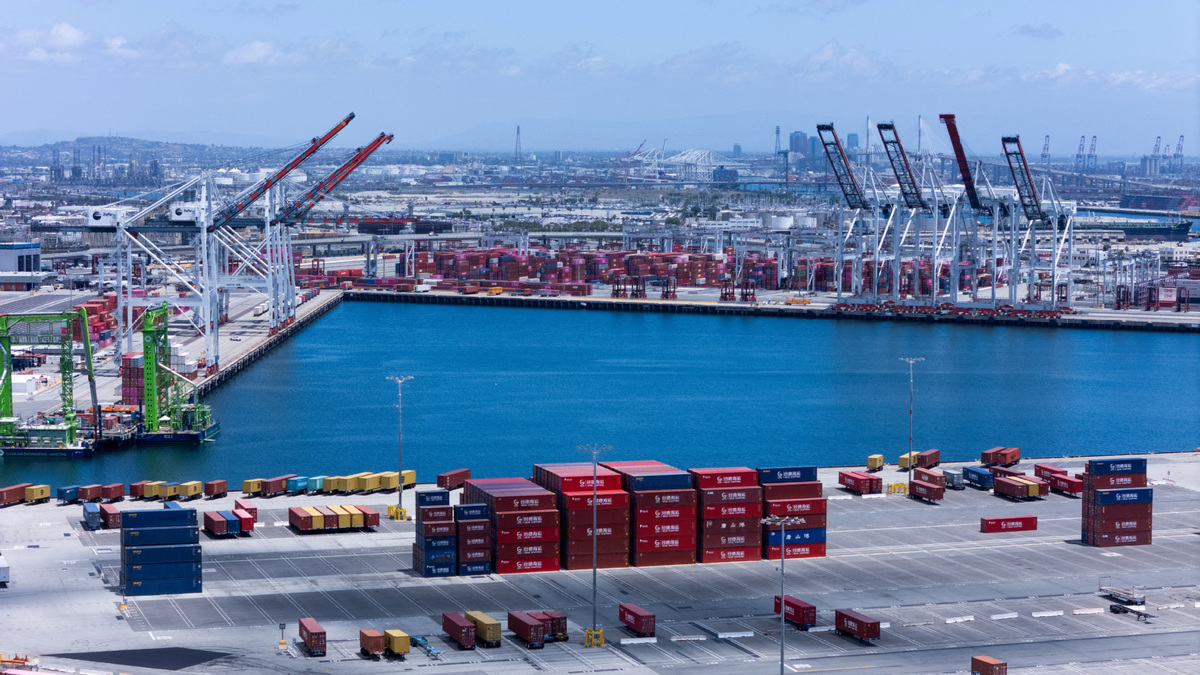
Despite recent reductions in US tariffs on Chinese imports, industry experts warn that the damage has already been done, with unpredictable policy shifts creating long-term uncertainty for businesses on both sides of the Pacific.
The White House announced last week that the 145 percent tariff on Chinese imports would be temporarily reduced to 30 percent for 90 days, effective May 14. The announcement comes just weeks after US President Donald Trump imposed sweeping tariffs early last month.
"It's significant that the two sides are talking, and that they both recognize that a deal is necessary. The tit-for-tat was pointless, and jacking up tariffs to a prohibitive level was always going to hurt both countries," Ker Gibbs, a partner at US-based business advisory Foresight Restructuring and former president of the American Chamber of Commerce in Shanghai, told China Daily.
However, Gibbs said the current agreement does not adequately address the issues, and it doesn't give long-term visibility to businesses that want to trade and make investments.
"The instability and unpredictability have been damaging to business, and with tariffs set to snap back after 90 days, the uncertain environment hasn't changed."
The tariff reduction has prompted an immediate surge in container bookings from China to the US. According to a Reuters report, the average bookings for the seven days that ended on May 12 soared 277 percent to 21,530 20-foot equivalent units from 5,709 TEUs for the average for the seven days that ended on May 5, container-tracking software provider Vizion said.
However, industry experts note that the constant policy shifts have caused lasting damage to business relationships that typically take years to build.
"The uncertainty and the way this has unfolded have done long-term damage. Relationships with suppliers have been built up over the years. Now, importers have no choice but to look for alternatives outside China, and it's impossible to make long-term commitments," Gibbs said.
Short-term approach
"Contracts typically extend 90 days to 12 months, but relationships are much longer. Factory owners need to know who they are working with, and what investments they need to make. This short-term transactional approach, and keeping everyone guessing about the next move, has consequences," Gibbs said.
"Without a long-term deal with China, the US becomes cut off from China as a supplier, and that's a problem. There are alternatives for some types of goods, like apparel and footwear. For other products like auto parts and tools, it will take years to develop new sources," he said.
The technology sector faces severe challenges from the tariff uncertainty. Bob O'Brien, research director at Counterpoint Technology Market Research, noted that in 2024, about 70 percent of smartphones, 75 percent of mobile PCs (laptops and tablets), and about 80 percent of monitors imported to the US came from China.
He estimated that if import patterns remained unchanged in 2025, US importers would have to pay $15 billion in tariffs. While companies may try to shift production to Southeast Asia or Mexico, the greatest challenge is "this fundamental uncertainty", he said.
A company that invests millions or even billions of dollars in a manufacturing plant, with 12 to 18 months of development time, could see their rationale behind the investment become invalid with another executive order, said O'Brien.
The uncertainty has led many companies to consider reducing their focus on the US market, Ross Young, vice-president of research at Counterpoint, told China Daily. "Companies are concerned they will have to operate at lower utilization, face higher costs, and ultimately raise prices. Tariffs are not healthy for the industry," he said.
Many companies are now considering whether to reduce their shipments to the US market and focus more on Europe, Asia, or other regions, Young said.
"Uncertainty is never good. Companies are considering skipping the US market in terms of their end products."
liazhu@chinadailyusa.com