


New Progress In Legal Protection Of Human Rights In China









The State Council Information Office of the People's Republic of China published a white paper titled "New Progress in the Legal Protection of Human Rights in China" on Friday. Following is the full text of the white paper:
Preamble
I. Improving the Legal Framework to Ensure Human Rights
II. Promoting Law-based Administration to Protect the Citizens' Lawful Rights and Interests
III. Effectively Enhancing Judicial Protection of Human Rights
IV. Consolidating Social Mechanisms for Legal Protection of Human Rights
V. Strengthening the CPC Leadership over Legal Protection of Human Rights
VI. Actively Promoting the Development of Global Human Rights Under the Rule of Law
Conclusion
Preamble
The rule of law is a symbol of human progress, and serves as the guarantee for ensuring human rights. It is the determination and ultimate goal of the Communist Party of China (CPC) and the Chinese government to fully implement law-based governance of the country, strengthen legal protection of human rights in all areas, ensure that the Chinese people fully enjoy their rights and freedoms, achieve social fairness and justice, and promote overall human development and social progress.
Over the years China has upheld the law-based governance of the country as a basic guideline, striving to put the rule of law in a socialist context and making new progress in legal protection of human rights. Since the 18th CPC National Congress, the Party's Central Committee with Xi Jinping as its core has maintained people-oriented development. As an integral part of its effort to modernize the state governance system and capacity, it has created a strategy of fully enforcing the law-based governance of the country, giving more weight to respecting and ensuring human rights in building socialism under the rule of law, and opening a new era of legal protection of human rights in China.
In implementing the law-based governance of the country, China has upheld human rights in every link of the process, from legislation through law enforcement and judicial justice to a law-abiding society. Respecting and ensuring human rights has become an important principle in legislation, and the socialist legal system with Chinese characteristics, with the Constitution at its core, has been steadily improved. Law-based governance has been further implemented, and the exercise of administrative power has been regulated to a fuller extent. Judicial reform has been extended, with the goal of ensuring fairness and justice in every case handled. Further progress has been made in ensuring the rule of law for society, with a significant improvement in elevating public awareness in law and human rights, and the CPC, upholding law-based governance, has laid a solid foundation for legal protection of human rights.
After five years of strenuous effort in reform and development, China has made remarkable progress in law-based human rights protection. People's basic rights and freedoms are now better protected under Chinese socialism. The undertaking of human rights protection in China has made much headway. Committed to a great and unprecedented cause, China is contributing to the diversity of human civilization and providing Chinese wisdom and solutions to promote social progress.
I. Improving the Legal Framework to Ensure Human Rights
A complete system of laws is the precondition and the basis for realizing legal protection of human rights. Since the 18th CPC National Congress, China has, to a fuller extent, established the Chinese socialist legal system with the Constitution at the core, the laws as the main body, including administrative and local regulations, and various law-related departments, thus laying a solid legal foundation for ensuring human rights.
Improving legislative systems and mechanisms. China has revised the Legislation Law, and strengthened the systems for documenting and reviewing regulations, rules, and other normative documents. There is a clear provision that relevant bodies must take the initiative in reviewing normative documents, send feedback to those who request to have the documents reviewed, and release the results to the public. China has rescinded and corrected laws, regulations and normative documents which conflicted with the Constitution or laws, so that there is no impediment to the functioning of the Constitution and other laws. In 2016 legislative bodies reviewed and put on record 37 administrative regulations and judicial interpretations, reviewed local regulations in targeted areas, and handled 92 requests to review such documents.
China has improved the allocation of legislative power in the context of local development, and accorded local legislative powers to 240 cities with districts, 30 autonomous prefectures, and 4 prefecture-level cities. By October 2017 the cities and prefectures with newly accorded legislative powers had issued 456 local regulations and 193 government rules. It is stipulated in the Legislation Law that rules and regulations made by a department or local government, if not based on laws enacted by upper levels, must not impair the rights of citizens, legal persons, and other organizations, or increase the scope of their obligations, and must not increase the power of that department or reduce that department' s duties prescribed by law.
China has included in its legislation program major reform measures that need to be addressed through legislative procedure, and has revised or abolished laws that fell out of pace with reform. From 2013 to June 2017, the Standing Committee of the National People's Congress (NPC) made 17 legislation authorizations and reform decisions in accordance with legal procedures, ensuring that relevant reforms proceed in an orderly manner within the legal framework.
China has improved its legislative process, including procedures such as discussions, hearings, and soliciting public opinion on draft laws, so that the laws reflect the people's will. By October 2017 the 12th NPC Standing Committee had solicited public opinion on draft laws on 74 occasions. For the draft General Provisions of Civil Law alone, the Standing Committee held three deliberation sessions, sought public opinion on three occasions and organized several dozen expert meetings, and received 70,227 suggestions from 15,422 people. When deliberating on the second reading draft of Amendment (IX) to the Criminal Law, the Committee received more than 110,000 suggestions from the public.
Fully protecting the citizens' rights and interests by enacting the General Provisions of Civil Law. Adopted at the Fifth Session of the 12th NPC, the General Provisions of Civil Law, developed with the purpose of protecting people's rights, offer clear provisions on the basic principles of equality, free will, fairness, and honesty, give prominence to autonomy of will and protection of rights and interests, and reflect the legislators' intention of giving full protection to the person, upholding the value of the individual, and ensuring personal development. The Provisions have strengthened protection of property rights, stipulating that the "property rights of civil subjects are equally protected by law", through which the equal protection of real rights in Property Law is expanded to equal protection of all property rights. The Provisions have strengthened protection of the civil rights of specific subjects, and in particular of the rights and interests of minors, and have included senior citizens in the guardianship system. By enacting the Provisions China has established a complete civil rights system, with clear stipulations that privacy rights are protected by law, and strengthened the protection of personal information, data, and virtual assets online.
Improving legislation on economic, social and cultural rights. It has been made clear that tax categories, tax rates, tax collection and management, and other basic taxation systems can only be set and defined by law. To protect the legitimate rights and interests of workers, China has revised the Employment Promotion Law, the Labor Contract Law, the Law on Production Safety, and the Law on the Prevention and Control of Occupational Disease. To enhance protection of people's health, it has promulgated the Law on Traditional Chinese Medicine and revised the Food Safety Law. China has revised the Law on Population and Family Planning, now encouraging all couples to have two children. China has enacted the Law on Ensuring Public Cultural Services and the Film Industry Promotion Law, in an effort to enrich public cultural services, standardize these services and make them more equally available, and ensure the people' s cultural rights. To protect its citizens' right to education, China has revised the Education Law to promote equality and balanced development of education, accelerate expansion of the scope of preschool education, and build a public service network for preschool education that covers the whole country, especially rural areas. With the promulgation of the Interim Regulations on Residence Permit, all permanent residents in cities and towns are covered by basic public services and are able to enjoy access to urban infrastructure. Some other laws that have been amended or revised include the laws on environmental protection, prevention and control of air pollution, protection of wild animals, marine environmental protection, prevention and control of water pollution, environmental impact assessment, and prevention and control of environmental pollution caused by solid wastes. To strengthen environmental supervision and accountability, improve public interest litigation on environmental protection, and ensure citizens' right to know about, participate in and oversee environment-related issues, China has enacted the Law on Environmental Protection Tax. To register all types of real estate, ensure transaction security, and protect the legitimate property rights of owners of the immovable assets, China has promulgated the Interim Regulations on Real Estate Registration. In order to protect the personal information of consumers, increase the liability for damage caused by fraud on the part of business operators, regulate unfair terms in contracts prepared by operators, and protect the legitimate rights and interests of consumers, China has revised the Law on the Protection of Consumer Rights and Interests. To promote exchanges and cooperation involving overseas non-governmental organizations in China, China has enacted the Law on the Administration of Activities of Overseas Non-Governmental Organizations Within the Territory of the People's Republic of China. And to strengthen supervision over charity organizations and charity activities, regulate the use of charity property, promote the development of charity in China, and protect the legitimate rights and interests of charity organizations, donors, volunteers, beneficiaries, and other participants in charity activities, China has promulgated the Charity Law.
Improving legislation on civil and political rights. China has revised the Criminal Law, abolishing nine death penalty charges and raising the bar on executing convicts that have received a death sentence with a two-year reprieve; revised the Civil Procedure Law, allowing procuratorial organs to lodge civil public interest lawsuits; and revised the Administrative Procedure Law, to improve the administrative adjudication system, expand the scope of accepting administrative litigation cases, relax restrictions on the qualification of plaintiffs in administrative litigation and third parties, strengthen supervision over administrative adjudication and enforcement of court rulings, and protect the legitimate rights and interests of parties in administrative proceedings. The Standing Committee of the NPC passed the Decision on Annulment of the Regulations on Education Through Labor, putting an end to this sanction. To implement the rule of law and promote humanitarianism, China has implemented the amnesty system stipulated in the Constitution, and granted amnesty for four types of criminals. China has promulgated the National Security Law, National Intelligence Law, Counter-Espionage Law, Counter-Terrorism Law, Cyber Security Law, and Nuclear Security Law. The central government, also known as the State Council, and relevant departments have issued a series of administrative regulations on cyber security; the Supreme People's Court and the Supreme People's Procuratorate issued the "Interpretation on Several Issues Regarding the Applicable Law in Cases of Using Information Networks to Commit Defamation and Other Such Crimes" and other judicial interpretations, providing a solid legal basis for safeguarding national security, public security, and personal and property security.
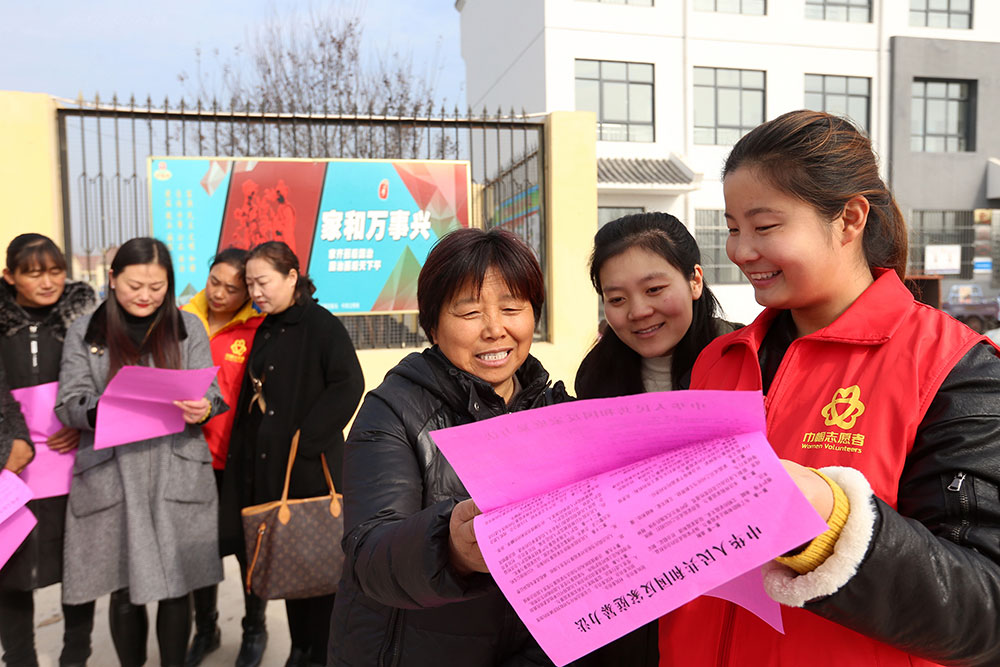
Strengthening legislation on ensuring the rights of special groups. China has enacted the Anti-Domestic Violence Law, and set up systems such as written admonition, personal safety protection writ, and compulsory report, making clear the legal liabilities of the perpetrators and the procedure of investigation in order to effectively protect the legitimate rights and interests of victims of domestic violence, particularly minors, the elderly, the disabled, pregnant and lactating women, and the seriously ill. China has revised the Criminal Law, increasing criminal punishment for buyers of abducted women and children, and has criminalized such acts. It is clearly stipulated that anyone who maltreats a minor, an elderly person, a sick person, or a disabled person, for whose support they are responsible, will be held criminally liable if the case is serious. China has formulated the Regulations on School Bus Safety to ensure students' personal safety; and enacted and revised the Regulations on Building an Accessible Environment, Regulations on Disability Prevention and Rehabilitation, and Regulations on Education for Persons with Disability, to enhance protection of the rights of disabled persons. A gender equality evaluation mechanism for laws and policies had been set up in 27 provinces and equivalent administrative units by June 2017.






- HKSAR chief executive says to conclude residential complex fire probe within 9 months
- Viral scenic valley in China, not Japan, operators of tourist attraction clarify
- European Chamber Shanghai Chapter calls for stronger EU-China sustainability ties
- Former senior official at State Council body under investigation
- CITIC Group deputy general manager sentenced to life
- Qingdao Port integrates clean energy with China's first hydrogen-electric tugboat